
What's Happening?
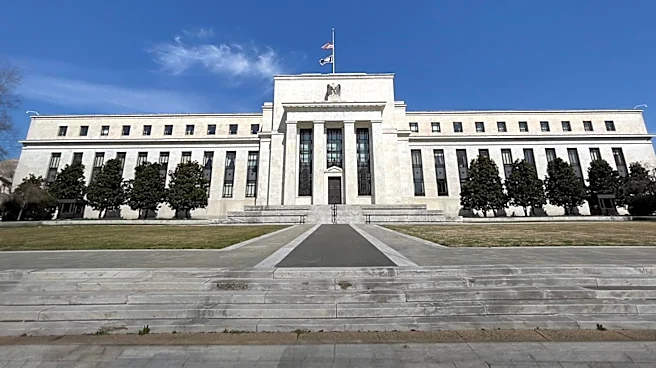
President Trump has restarted the process to remove Federal Reserve Governor Lisa Cook, following a previous attempt in 2025 that was blocked by the Supreme Court due to procedural issues. The Supreme Court ruled
that Cook was entitled to an explanation of the evidence, an avenue for response, and a deadline. Last month, the administration sent Cook a letter indicating that President Trump was considering her termination and demanded a response by August 26, which she provided. The decision regarding her employment now rests with the administration. This action is part of a broader pattern of President Trump's criticism of the Federal Reserve's monetary policy, which also includes a criminal probe against former Fed Chair Jerome Powell. President Trump has consistently advocated for lower interest rates, expressing his belief that U.S. rates should be 1% or less.
Why It's Important?
This ongoing effort to remove a Federal Reserve Governor highlights a significant challenge to the independence of the U.S. central bank. The Federal Reserve's autonomy from political pressure is considered crucial for its ability to make monetary policy decisions based solely on economic data, rather than political expediency. If President Trump successfully removes Governor Cook, it could set a precedent that undermines the Fed's independence, potentially leading to increased political interference in monetary policy. Such interference could destabilize financial markets, erode investor confidence, and raise concerns about the long-term credibility of U.S. economic institutions. The situation also underscores the tension between the executive branch's desire for specific economic outcomes and the Fed's mandate to maintain price stability and maximum employment, irrespective of political cycles.
What's Next?
The administration now holds the decision regarding Governor Cook's future at the Federal Reserve. President Trump could choose to fire Cook again, though any such decision would likely face immediate legal challenges and court review, similar to the 2025 attempt. The outcome of this process could further define the boundaries of presidential authority over independent agencies like the Fed. Additionally, the Department of Justice's investigation into former Fed Chair Jerome Powell, which was previously closed but could be reopened pending an inspector general's report, adds another layer of potential conflict. These developments suggest continued scrutiny and potential legal battles over the Federal Reserve's leadership and its independence from political influence.
Beyond the Headlines
The repeated attempts by President Trump to remove Federal Reserve officials, coupled with his public criticism of the Fed's monetary policy, raise fundamental questions about the institutional checks and balances designed to protect the central bank's independence. The Supreme Court's initial intervention in 2025 underscored the importance of due process, even for presidential appointments. The current situation could lead to a re-evaluation of the legal framework governing the removal of Fed governors, potentially strengthening or weakening the safeguards against political interference. This ongoing struggle has broader implications for democratic governance, as it tests the resilience of independent institutions against executive pressure and could influence how future administrations interact with expert bodies tasked with critical economic functions.