
What's Happening?
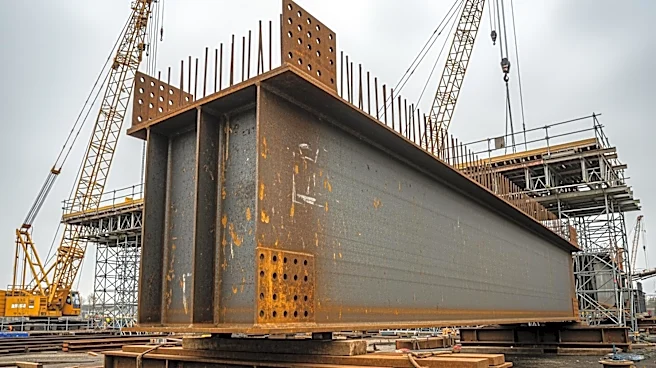
Maryland's ambitious plan to rebuild the Francis Scott Key Bridge has encountered a significant obstacle as state officials have canceled a major construction contract. The contract with Kiewit Infrastructure
Co., responsible for the project's critical second phase, was terminated due to proposals that significantly exceeded state cost estimates. This decision challenges Governor Wes Moore's assertion that the project was the nation's 'fastest-moving' large infrastructure effort. The project's costs have ballooned from an initial estimate of $1.8 billion to over $5.2 billion. The Maryland Transportation Authority (MDTA) and the U.S. Department of Transportation (USDOT) announced the cancellation, emphasizing the need to protect taxpayers and maintain project timelines. The state will now seek a new contractor to continue the project, which involves finalizing the bridge's design and beginning construction.
Why It's Important?
The cancellation of the Key Bridge contract is a critical development in Maryland's infrastructure landscape, highlighting the challenges of managing large-scale public projects. The decision underscores the importance of cost control and efficient project management, especially in high-profile initiatives. For Governor Moore, this situation tests his administration's ability to deliver on infrastructure promises and manage public funds effectively. The project's delay could impact regional transportation and economic activities, given the bridge's significance in connecting key areas. Additionally, the federal oversight and scrutiny from USDOT reflect broader concerns about fiscal responsibility and transparency in public projects, which could influence future infrastructure initiatives across the U.S.
What's Next?
Maryland will host an industry forum in May to begin the process of selecting a new contractor for the Key Bridge project. This rebidding process involves reengaging the private sector and negotiating new terms, which could affect the project's timeline and public confidence. The state aims to keep the project on track despite the setback, with ongoing Phase 1 activities continuing. The situation also raises questions about potential legal actions from Kiewit, the former contractor, which could further complicate the project's progress. The outcome of these developments will be closely watched by stakeholders, including federal agencies, local communities, and transportation authorities.