








What's Happening?
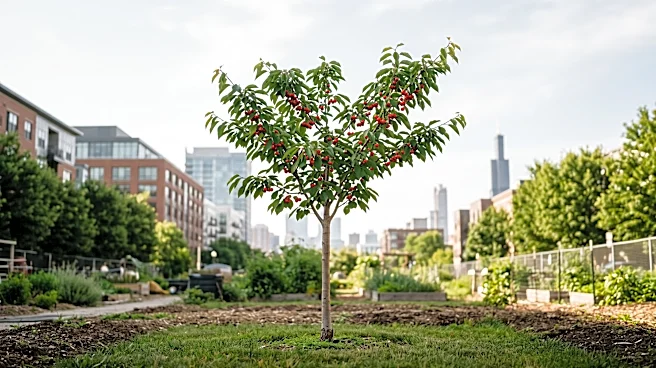
The Giving Grove, a Kansas City-based nonprofit, has significantly expanded its mission of planting fruit and nut trees in vacant urban lots across the United States. The organization, which started by assisting volunteers in Kansas City, has now branched
out to 17 cities nationwide, establishing nearly 850 orchards. These orchards collectively produce over 2.5 million pounds of fruit and nuts annually. The initiative focuses on transforming unused urban land into community resources that provide free, organic food. The Giving Grove supports local community garden organizations by sharing expertise, offering training and workshops, and providing seed money for necessary equipment and staffing. This model relies heavily on corporate donations for funding and volunteer labor for planting and maintenance. The organization's marketing director, Sarah Sikich, notes the broad appeal of planting fruit trees, while founder Kevin Birzir emphasizes that the core concepts of turning unused land into neighborhood parks and growing free food are applicable in diverse urban environments, from Brooklyn to Utah.
Why It's Important?
This expansion is important for several reasons, primarily addressing food insecurity and promoting community engagement in urban areas. By establishing orchards in vacant lots, The Giving Grove provides accessible sources of fresh, organic produce to residents who might otherwise have limited access to healthy food options. This initiative can significantly impact public health by encouraging healthier eating habits and reducing reliance on less nutritious alternatives. Furthermore, these urban orchards transform underutilized spaces into green areas, enhancing neighborhood aesthetics and fostering a sense of community ownership and pride. The model of providing training and initial funding empowers local groups to sustain these projects, creating long-term benefits for urban ecosystems and social cohesion. The widespread adoption of this model across various cities demonstrates a scalable solution for urban revitalization and food justice, potentially inspiring similar initiatives in other communities facing similar challenges.
What's Next?
The Giving Grove anticipates further expansion, as the organization is receiving invitations from numerous other cities interested in replicating its model. The immediate next steps will likely involve assessing these new opportunities, providing the necessary training and resources to new partner organizations, and continuing to secure corporate funding to support its growing operations. The organization will also likely focus on refining its support systems to ensure the long-term viability and productivity of the newly established orchards. This includes ongoing educational programs for volunteers and community members on tree care and harvesting. As the network of orchards grows, there may be opportunities for inter-city collaboration and knowledge sharing among participating communities. The success of this model could also encourage local governments and urban planning departments to integrate similar green infrastructure projects into their development plans, further amplifying the impact of urban agriculture.
Beyond the Headlines
Beyond the immediate benefits of food production and greening urban spaces, The Giving Grove's initiative touches upon deeper societal implications. It represents a grassroots movement towards greater food sovereignty, empowering communities to take control of their food sources rather than relying solely on commercial supply chains. This can foster resilience in urban food systems, particularly in the face of economic disruptions or environmental challenges. Ethically, it promotes equitable access to nutritious food, addressing disparities often found in food deserts within cities. Culturally, these orchards can become focal points for community gathering, education, and intergenerational learning, reconnecting urban dwellers with nature and the origins of their food. The long-term shift could be a re-imagining of urban landscapes, where productive green spaces are integrated as essential components of healthy, sustainable cities, challenging traditional notions of urban development that often prioritize concrete and commercial structures over ecological and community well-being.