



What's Happening?
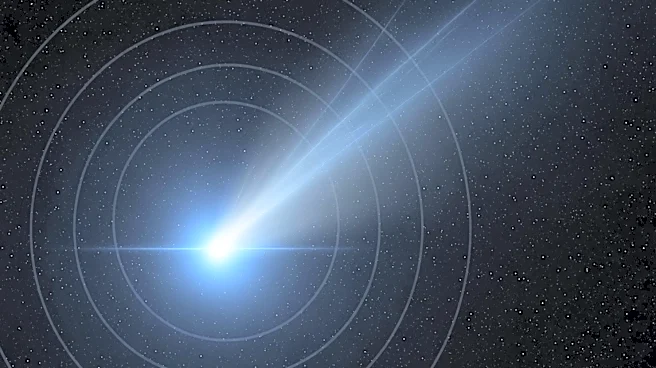
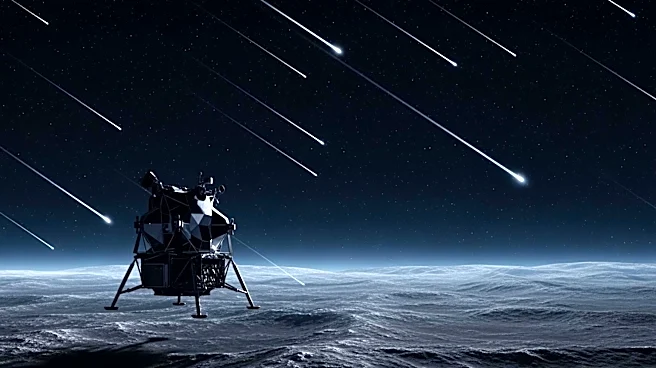
NASA is assessing the potential risks posed by meteor storms to its future Artemis moon missions. The agency estimates that approximately 48.5 tons of space debris enter Earth's atmosphere daily, ranging from tiny micrometeoroids to larger particles.
These fast-moving debris can pose significant threats to spacecraft, potentially damaging critical systems or causing catastrophic ruptures. NASA has developed protocols to mitigate these risks, including delaying missions or keeping crews inside during major meteor events. The Orion spacecraft, used for Artemis missions, is designed to withstand micrometeoroid impacts, with material selections and thicknesses optimized for protection. NASA's strategies will be crucial as it aims to establish a permanent presence on and around the moon.
Why It's Important?
The potential impact of meteor storms on NASA's Artemis missions is significant as it could delay or endanger the safety of lunar missions. The Artemis program is a cornerstone of NASA's efforts to return humans to the moon and establish a sustainable presence. Delays or damage from meteor storms could affect mission timelines and budgets, impacting international partnerships and scientific objectives. The ability to predict and mitigate these risks is crucial for mission success and the safety of astronauts. The broader implications also include the need for robust space debris management strategies as human activities in space increase.
What's Next?
NASA and its partners will continue to perform risk assessments and refine their strategies for dealing with micrometeoroid impacts. The agency will monitor upcoming meteor outbursts, such as those predicted for the Perseids in 2028 and the Leonids in 2033 and 2034, to ensure mission safety. Future Artemis missions may be rescheduled if they coincide with significant meteor events. NASA's ongoing efforts to enhance spacecraft resilience and improve forecasting capabilities will be critical as it progresses towards establishing a permanent lunar presence.