
What's Happening?
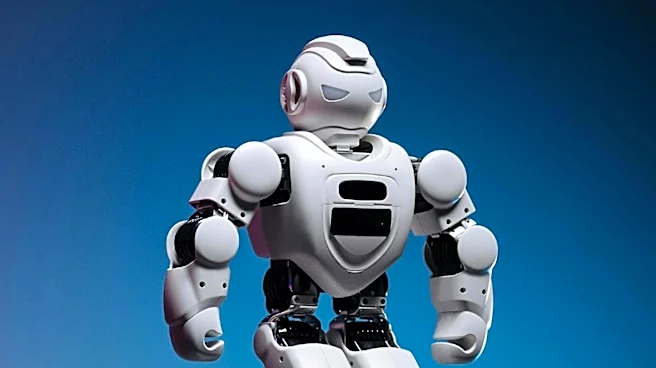
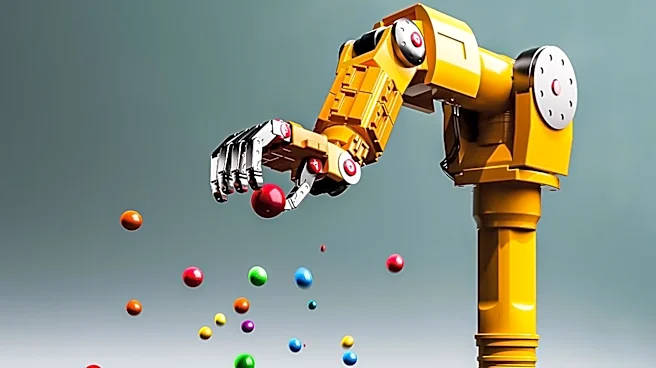
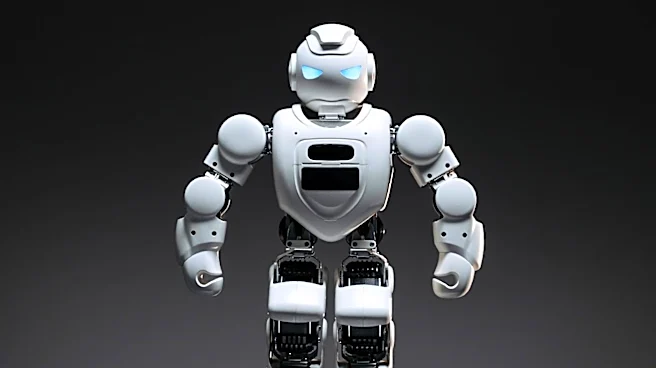
The emergence of embodied AI agents is set to revolutionize various aspects of daily life and industry. These agents, which include autonomous vehicles, drones, and adaptive industrial arms, are becoming
increasingly integrated into environments such as homes, hospitals, and workplaces. A study by Capgemini Research Institute indicates that 79% of organizations are exploring physical AI, with 27% already deploying or scaling these technologies. The transition to embodied AI is expected to be gradual, with applications arriving one by one, reshaping how humans interact with machines and altering societal norms.
Why It's Important?
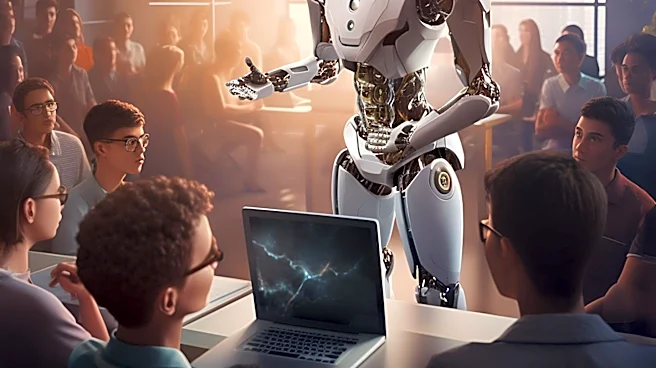
The integration of embodied AI agents into daily life represents a significant shift in how humans interact with technology. These agents have the potential to enhance efficiency and safety in various sectors, including healthcare, logistics, and manufacturing. As machines gain the ability to perceive, plan, and act in the real world, they will redefine human-machine collaboration and challenge existing legal and ethical frameworks. The widespread adoption of embodied AI could lead to new economic opportunities and societal changes, as industries adapt to the capabilities and limitations of these technologies.
Beyond the Headlines
The rise of embodied AI agents raises important ethical and cultural questions about the role of machines in society. As these agents become more autonomous, issues of accountability, privacy, and human-machine interaction will become increasingly complex. The potential for machines to learn collectively and share experiences across networks introduces new dimensions to AI development. The societal impact of embodied AI will depend on how these technologies are integrated into existing systems and how humans adapt to living alongside intelligent machines. The long-term implications of this transition will shape the future of work, urban planning, and social norms.