



What's Happening?
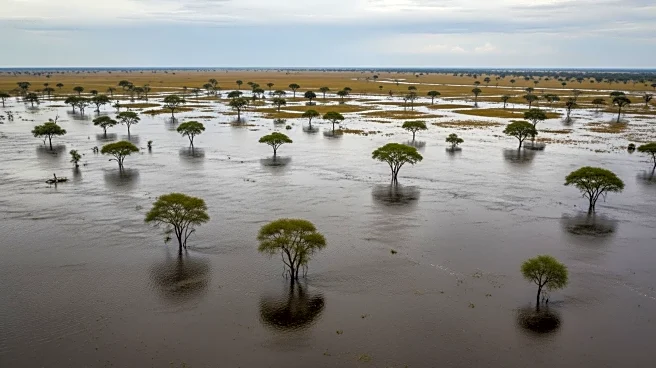
Kruger National Park, a major tourist attraction in South Africa, has been forced to close due to severe flooding in the northern provinces of Limpopo and Mpumalanga. The South African Weather Service has issued a red level 10 warning, indicating extreme
weather conditions with more rain expected. The flooding has resulted in at least 19 deaths, including a five-year-old boy in Giyani, Limpopo. President Cyril Ramaphosa visited the affected areas to assess the damage and offer condolences to the victims' families. The park has evacuated some guests and staff by helicopter, and residents are advised to stay indoors and move valuables to higher ground. The floods have also destroyed infrastructure, including roads and bridges, prompting the deployment of soldiers to assist in rebuilding efforts.
Why It's Important?
The closure of Kruger National Park highlights the severe impact of climate change on tourism and infrastructure in South Africa. The park is a significant contributor to the local economy, attracting tourists from around the world. The flooding not only disrupts tourism but also poses a threat to local communities and wildlife. The damage to infrastructure, such as roads and bridges, further complicates recovery efforts and underscores the need for improved disaster preparedness and climate resilience. The situation also raises concerns about the increasing frequency and severity of weather-related disasters in the region, which could have long-term implications for economic stability and public safety.
What's Next?
Efforts are underway to restore infrastructure and ensure the safety of residents and tourists. The Limpopo governor has requested additional funds from the central government to aid in recovery efforts, including restoring electricity and water supplies. The military's involvement in rebuilding roads and bridges is crucial for reconnecting affected areas. As the region braces for more rain, authorities are likely to continue monitoring weather conditions closely and may implement further safety measures. The situation may prompt discussions on enhancing climate resilience and disaster response strategies to better protect communities and vital economic sectors like tourism.