




What's Happening?
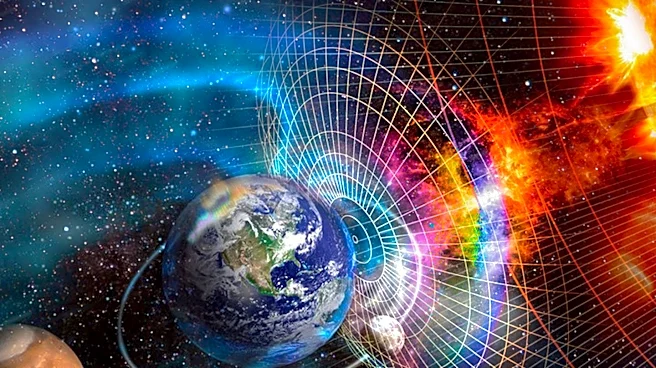
A team of researchers has successfully produced the first global, three-dimensional estimates of the Sun’s magnetic field, extending beyond its visible edge. This advancement is a crucial step toward creating more accurate models of solar activity and,
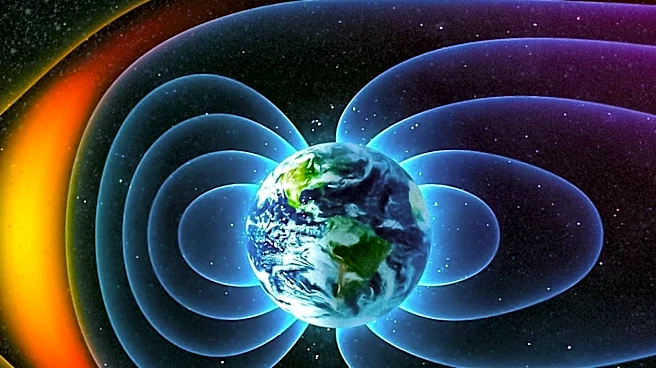
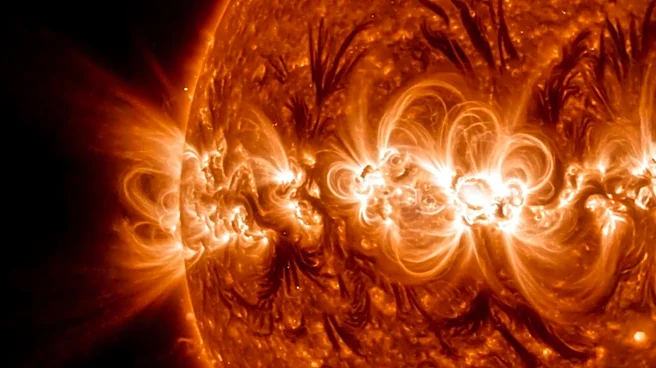
consequently, better predictions of solar magnetic eruptions. These eruptions are the primary cause of extreme space weather events that can disrupt critical infrastructure technologies on Earth. For decades, scientists have been able to observe the structure of the Sun’s upper atmosphere, known as the corona, but have been unable to fully measure the magnetic field that shapes it. The new study addresses this gap by applying a novel method to existing observations from the Mauna Loa Solar Observatory (MLSO), operated by the U.S. National Science Foundation National Center for Atmospheric Research (NSF NCAR). The method, detailed in The Astrophysical Journal Letters, reconstructs the 3D coronal magnetic field by extracting previously inaccessible information from these observations. This breakthrough allows for the visualization of the Sun’s hidden magnetic architecture in three dimensions by decoding light and waves emanating from the Sun’s corona, rather than requiring new ground or space instruments.
Why It's Important?
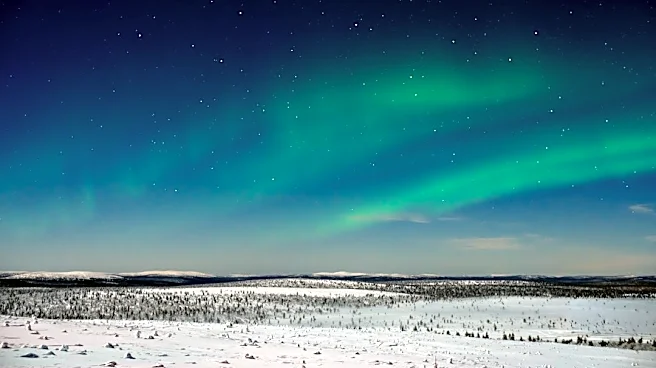
The ability to measure the Sun's magnetic field in three dimensions is profoundly important for safeguarding Earth's technological infrastructure. Solar magnetic eruptions, which are driven by these fields, can lead to severe space weather events. These events have the potential to cause widespread power outages, disrupt satellite communications, interfere with GPS systems, and even pose risks to astronauts. By providing more accurate and timely predictions of these eruptions, the new 3D mapping technique can give critical infrastructure operators more time to prepare and mitigate potential damage. This could involve adjusting power grids, reorienting satellites, or taking other protective measures. The research also deepens our fundamental understanding of how the Sun operates, from influencing solar wind to creating auroras. This enhanced knowledge is vital for long-term space exploration and for developing more resilient technologies against solar interference. The public availability of MLSO data and the research team's analysis software encourages further scientific collaboration and refinement of this critical predictive capability.
What's Next?
While the initial magnetic-field maps represent a significant observational demonstration of a previously theoretical technique, further development and validation are necessary before this approach can become a routine capability. The research team has made its analysis software and datasets openly available to encourage other scientists to test, refine, and extend the method. The ultimate goal is for this method to be integrated as a standard data product in the advanced COSMO observatory network, which is the follow-on facility to the current MLSO. Researchers are actively seeking community input to tweak and refine the method, aiming to make it broadly accessible and operational. This collaborative effort will be crucial for transitioning the technique from a research breakthrough to a practical tool for space weather forecasting, potentially leading to more reliable warnings and better preparedness for solar events in the future.
Beyond the Headlines
The development of 3D coronal magnetic field maps represents a paradigm shift in heliophysics, moving beyond two-dimensional observations to a more comprehensive understanding of the Sun's complex magnetic environment. This advancement has profound implications for our understanding of fundamental astrophysical processes, as the Sun's magnetic activity is a key driver of space weather throughout the solar system. Ethically, improved space weather prediction capabilities carry a responsibility to ensure that this information is disseminated effectively and equitably to all stakeholders, from government agencies to private industries and the general public. The long-term shift triggered by this development could be a more proactive and resilient approach to managing the risks posed by space weather, fostering international collaboration in space science, and potentially influencing the design and deployment of future space-based technologies to withstand solar disturbances. This research underscores the interconnectedness of celestial phenomena and human technological reliance, highlighting the critical need for continuous scientific inquiry into our cosmic environment.