







What's Happening?
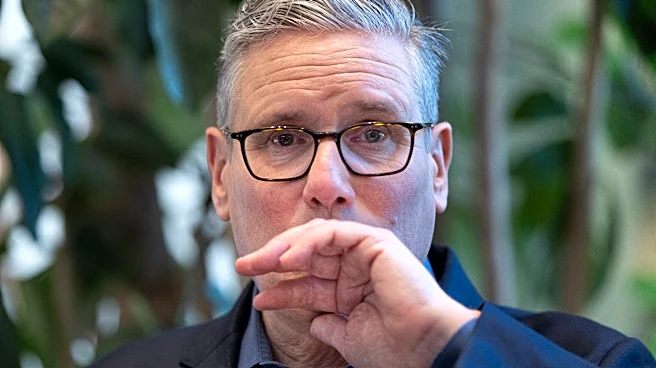
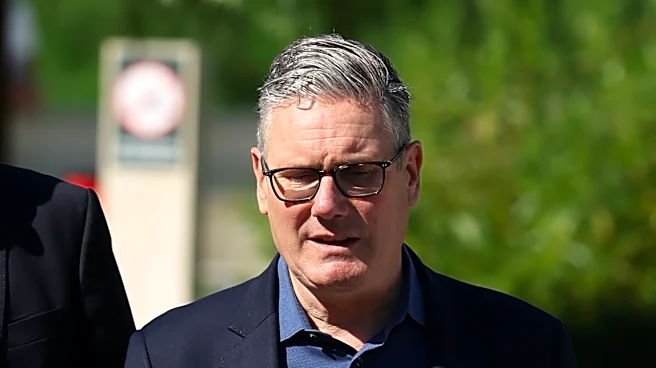
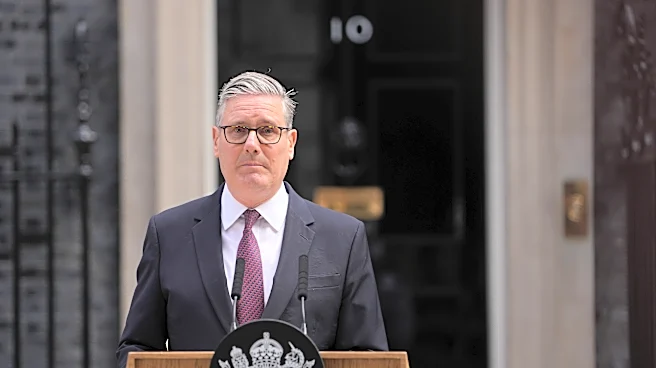
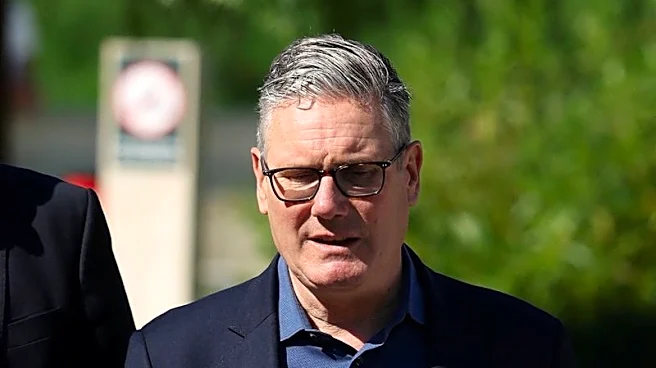
UK Prime Minister Keir Starmer has announced his resignation, less than two years after leading the Labour Party to a significant election victory. Starmer's decision comes amid internal party pressure and declining public support. He will remain in office
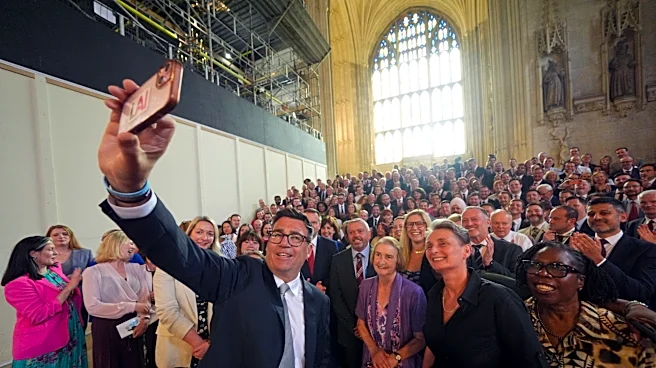
during a transition period until a new leader is chosen. The resignation marks a rare political upheaval in Britain, with Starmer being the seventh prime minister in a decade. Andy Burnham, the mayor of Greater Manchester, is emerging as a leading candidate to replace him. The political instability follows public dissatisfaction with the government's handling of economic issues, cost of living, and public services.
Why It's Important?
Starmer's resignation underscores the ongoing political instability in the UK, exacerbated by the rapid turnover of prime ministers since the 2016 Brexit referendum. The leadership change could impact the UK's economic policies and its approach to international relations. The uncertainty has already affected financial markets, with the pound weakening amid the political turmoil. The Labour Party's internal struggles highlight the challenges of maintaining political momentum and public support in a rapidly changing political landscape. The outcome of the leadership transition will be closely watched by both domestic and international stakeholders.