
What's Happening?
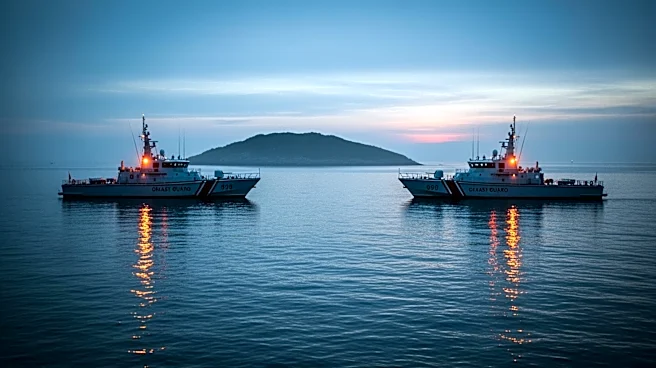
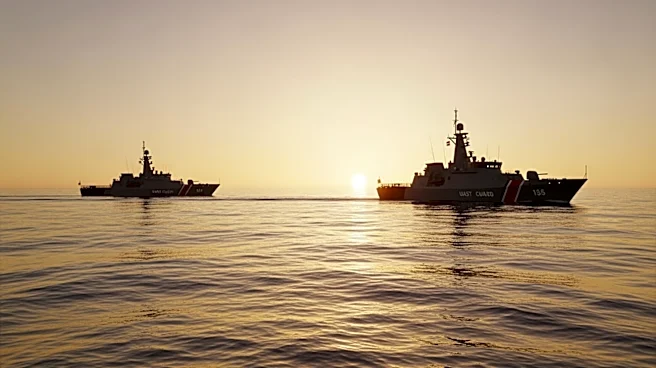
Taiwan's coast guard has deployed vessels in response to a Chinese operation east of the island, which Beijing described as a 'law enforcement operation.' The Taiwanese government detected four Chinese government vessels departing
from Xiamen and responded by dispatching more than five coast guard ships for surveillance. National Security Council Secretary-General Joseph Wu emphasized that the Chinese operation violates international law, asserting that China does not have sovereign rights in the waters east of Taiwan. This incident is part of a broader pattern of increased Chinese coast guard and navy deployments in the South China Sea, which have led to frequent confrontations with neighboring countries, including the Philippines.
Why It's Important?
The deployment of Taiwanese coast guard vessels highlights the ongoing tensions in the South China Sea, a region of strategic importance due to its significant shipping lanes and potential natural resources. The confrontation underscores the geopolitical struggle between China and its neighbors, including Taiwan, Japan, and the Philippines, over maritime boundaries and sovereignty claims. The situation could impact regional stability and international trade, as any escalation might disrupt shipping routes. Additionally, the incident reflects the broader geopolitical rivalry between China and the United States, with the latter often supporting Taiwan and other regional allies in their disputes with Beijing.
What's Next?
The situation may lead to further diplomatic engagements or confrontations as Taiwan and its allies, such as Japan and the Philippines, continue to assert their maritime rights against Chinese claims. The international community, including the United States, may increase diplomatic pressure on China to adhere to international maritime laws. Future developments could include more coordinated naval exercises among China's regional rivals or increased diplomatic efforts to resolve the disputes peacefully.
Beyond the Headlines
The incident raises questions about the effectiveness of international maritime law in resolving disputes in the South China Sea. It also highlights the challenges faced by smaller nations in asserting their sovereignty against a major power like China. The ongoing tensions could lead to a reevaluation of regional security alliances and strategies, potentially influencing the balance of power in the Asia-Pacific region.