








What's Happening?
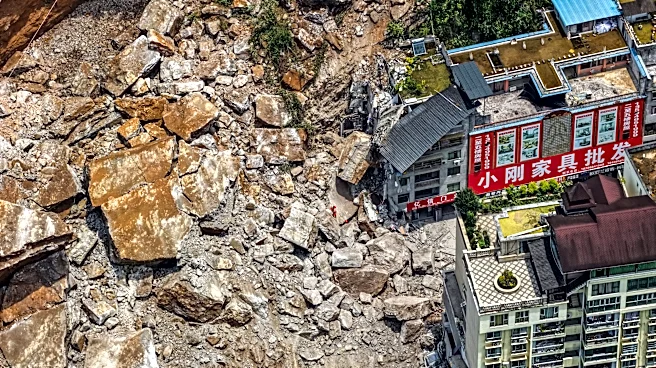
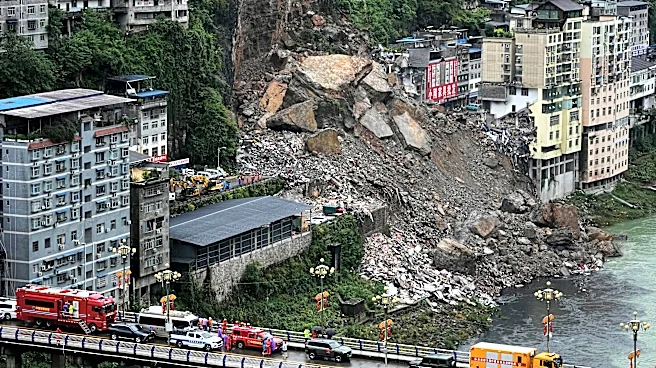
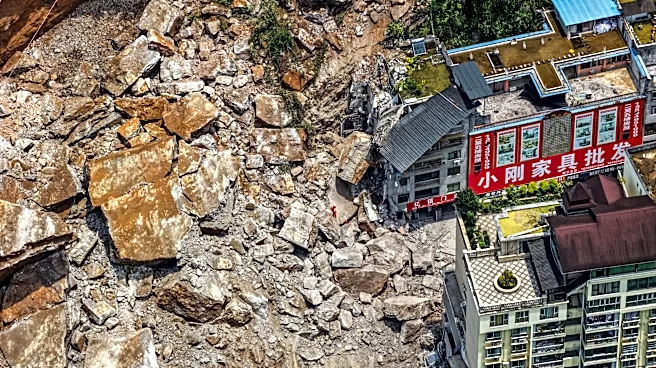
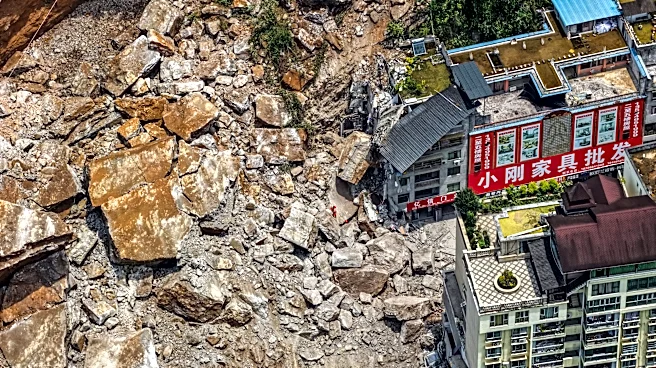
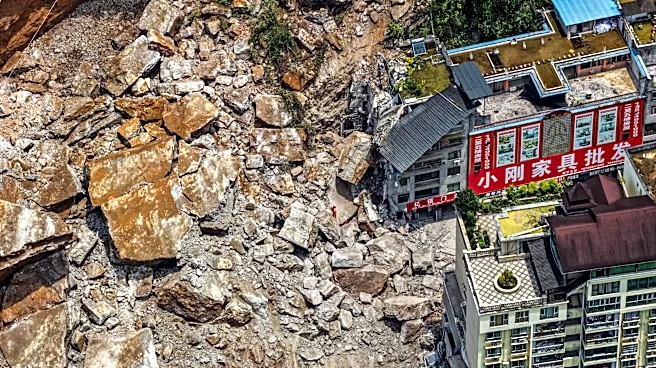
A significant landslide occurred in Chongqing's Pengshui County, southwest China, on July 17, 2026, burying over 10 residential buildings and forcing the evacuation of more than 1,100 residents. The landslide, triggered by heavy rains, resulted in massive
amounts of rocks and soil cascading down a mountainside, impacting a residential area. Rescue operations are underway, with at least 10 people rescued from the debris so far. The unstable terrain and risk of further landslides are complicating rescue efforts. The landslide also disrupted power supplies as several power poles were buried, leading to the suspension of water, electricity, and gas services within a 1-kilometer radius of the affected area.
Why It's Important?
The landslide highlights the vulnerability of regions in China prone to natural disasters, particularly in areas with complex terrain like Chongqing. The incident underscores the need for robust disaster preparedness and response mechanisms, especially in densely populated areas. The disruption of essential services such as power and water supply can have significant impacts on the local population, emphasizing the importance of infrastructure resilience. Additionally, the event draws attention to the broader implications of climate change, as increased rainfall and extreme weather events become more frequent, potentially leading to more such disasters.
What's Next?
Rescue operations are expected to continue as authorities work to locate and assist any remaining trapped individuals. Efforts to stabilize the terrain and prevent further landslides will be crucial in the coming days. The local government is likely to assess the damage and begin planning for the reconstruction of affected areas. There may also be a review of current disaster management strategies to improve future responses. The incident could prompt discussions on enhancing infrastructure resilience and implementing more effective early warning systems in vulnerable regions.