
What's Happening?
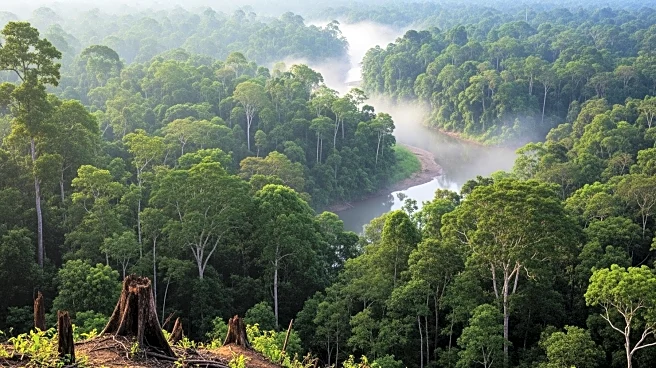
Recent flash floods in Sumatra, Indonesia, have been linked to decades of deforestation and poor land management, according to Indonesian officials. The floods, exacerbated by Cyclone Senyar, have highlighted
the vulnerabilities created by extensive land conversion for mining, palm oil, and pulpwood. Forestry Minister Raja Juli Antoni acknowledged that poor forest management intensified the disaster and pledged to review governance and revoke licenses of violators. The Environment Minister has suspended permits for several companies in the Batang Toru watershed. The government emphasized that the cyclone, a rare meteorological event, brought record rainfall to the region, but the systemic risks due to deforestation have been a significant factor in the disaster's impact.
Why It's Important?
The Sumatra floods underscore the critical need for sustainable land management practices in Indonesia. The extensive deforestation has not only increased the risk of flooding but also threatens biodiversity, including the endangered Tapanuli orangutan. The disaster highlights the broader implications of environmental mismanagement, which can exacerbate natural disasters and lead to significant human and economic losses. The Indonesian government's response to this crisis could set a precedent for future environmental policies and land-use regulations, potentially influencing global discussions on climate change and sustainable development.
What's Next?
The Indonesian government is expected to implement stricter land management policies and enforce existing regulations to prevent future disasters. This may include revoking licenses of companies that violate environmental laws and restoring degraded forests and peatlands. The international community and environmental organizations will likely monitor these developments closely, as Indonesia's actions could have significant implications for global environmental governance and climate change mitigation efforts.
Beyond the Headlines
The Sumatra floods reveal deeper issues related to governance and environmental policy in Indonesia. The disaster has sparked discussions on the need for comprehensive land-use planning and the enforcement of spatial plans to mitigate the impact of rare meteorological events. The situation also raises ethical questions about the responsibility of governments and corporations in managing natural resources sustainably and protecting vulnerable communities from the consequences of environmental degradation.