








What's Happening?
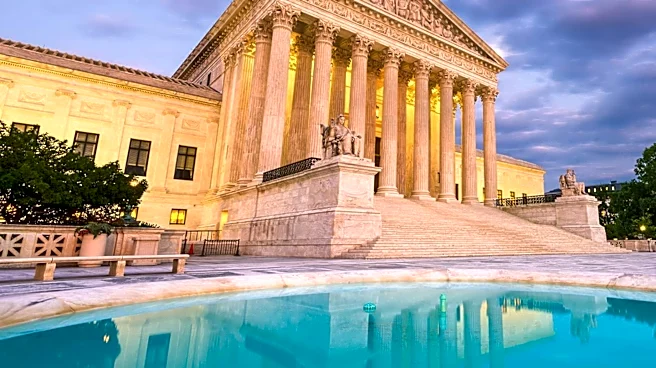
The U.S. Supreme Court has dismissed a lawsuit filed by Damon Landor, a Rastafarian inmate, against Louisiana prison guards for forcibly shaving his dreadlocks, which he claimed violated his religious rights. The court ruled that the Religious Land Use
and Institutionalized Persons Act (RLUIPA) does not allow for lawsuits against government officials in their individual capacities unless they consent to be held liable. Landor's case arose from an incident in 2020 at the Raymond Laborde Correctional Center, where guards shaved his head despite his religious objections. The court's decision aligns with the Fifth Circuit's ruling that only the state, as a recipient of federal funding, can be held liable under RLUIPA.
Why It's Important?
This ruling has significant implications for religious rights within the U.S. prison system. It underscores the limitations of RLUIPA in providing remedies for inmates whose religious rights are violated by state officials. The decision may impact future cases where inmates seek damages for religious discrimination, as it restricts the ability to hold individual officials accountable. This could lead to increased scrutiny of how religious rights are protected in state-run institutions and may prompt legislative efforts to amend RLUIPA to provide clearer avenues for redress.
What's Next?
While the Supreme Court's decision limits individual liability, it leaves open the possibility for Landor to pursue claims against the Louisiana Department of Corrections and Public Safety. The case highlights potential areas for legislative reform, as noted by Landor's attorney, who suggested that Congress could amend RLUIPA to better protect inmates' religious rights. The ruling may also prompt state corrections departments to review and potentially revise their policies regarding religious accommodations to prevent similar legal challenges.