






What's Happening?
The U.S. Treasury has intervened in the foreign exchange market to support the Japanese yen, marking the first such action in over a decade. This intervention was conducted in collaboration with the Federal Reserve Bank of New York, which sold euros for yen on behalf
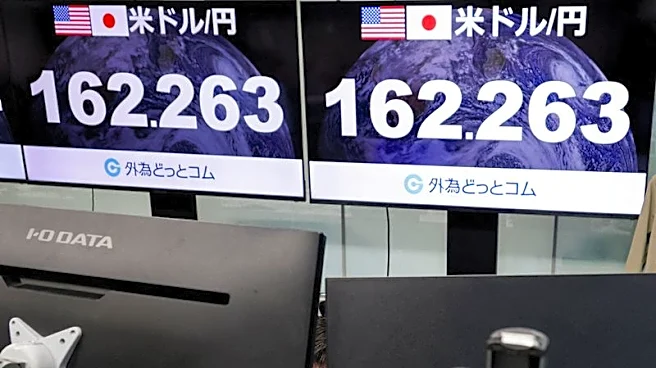
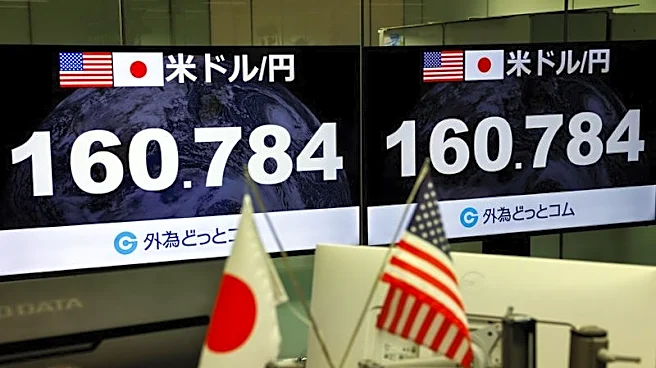
of the Treasury through financial institutions like Goldman Sachs and Morgan Stanley. The move comes as the yen has been trading near 40-year lows against the dollar. The Treasury had previously alerted banks to be prepared for potential intervention, signaling its readiness to stabilize the yen. This action follows Japan's own efforts to support its currency, which has been under pressure due to speculative trading and economic challenges.
Why It's Important?
The intervention by the U.S. Treasury is significant as it highlights the collaborative efforts between the U.S. and Japan to stabilize the yen, which is crucial for maintaining economic balance in global markets. A weak yen can lead to increased costs for Japanese imports, affecting trade balances and economic relations. The move also serves as a warning to speculators betting against the yen, potentially curbing excessive volatility in currency markets. For the U.S., a stable yen is important for maintaining healthy trade relations with Japan, a key economic partner. The intervention could also influence global currency markets, impacting exchange rates and international trade dynamics.
What's Next?
Japan and the United States may announce a joint policy to address the yen's weakness, potentially as early as next week. This policy could include further interventions or other measures to stabilize the currency. The announcement is expected to serve as a deterrent against speculative trading that has pressured the yen. Market participants will be closely watching for any official statements or policy changes that could impact currency trading strategies. The effectiveness of these interventions will be assessed based on the yen's performance in the coming weeks, and further actions may be taken if necessary to ensure market stability.