
What's Happening?
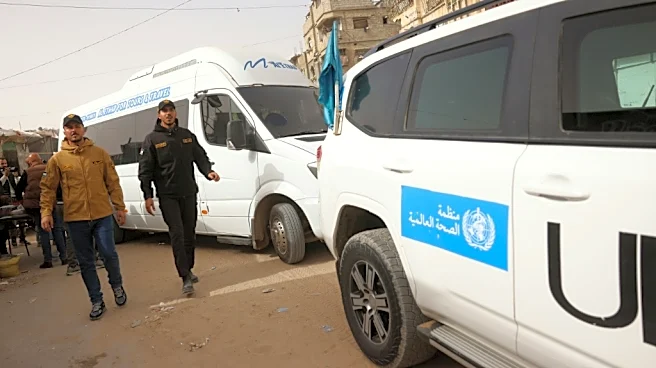
Military and civilian prosecutors have filed declarations ahead of indictments against two IDF officers and a civilian for allegedly exploiting humanitarian aid trucks to smuggle prohibited goods into
the Gaza Strip. The suspects are accused of moving contraband, including cigarettes and cellular devices, into Gaza in exchange for hundreds of thousands of shekels. The operation reportedly involved using military positions to access information about aid convoys, with the civilian suspect, Nasser Abu Mustafa, leveraging his connections to an IDF reservist officer to facilitate the smuggling. This case is part of a broader investigation into wartime smuggling activities, with previous indictments filed against other individuals for similar offenses.
Why It's Important?
The indictments highlight ongoing security challenges and the exploitation of humanitarian aid channels for illicit activities. Such smuggling operations can undermine regional stability by economically strengthening groups like Hamas, which is a significant concern for Israeli security. The case underscores the complexities of maintaining humanitarian aid flows while preventing the misuse of such channels for contraband. It also raises questions about the integrity of military personnel and the potential vulnerabilities within aid distribution systems.
What's Next?
Prosecutors are expected to file formal indictments soon, which could lead to trials and potential convictions. The case may prompt Israeli authorities to review and tighten security measures around aid convoys to prevent future smuggling attempts. It could also lead to increased scrutiny of military personnel involved in aid operations, potentially resulting in policy changes or additional oversight mechanisms.
Beyond the Headlines
This incident reflects broader issues of corruption and the challenges of balancing humanitarian needs with security concerns in conflict zones. It may also impact international perceptions of aid operations in Gaza, potentially affecting future aid contributions and collaborations. The case could serve as a catalyst for discussions on improving transparency and accountability in military and civilian aid operations.