






What's Happening?
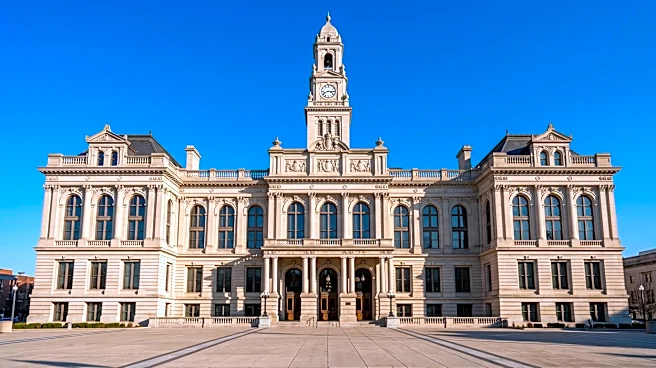
On October 6, 1780, John Chambers, who would later become Iowa's second territorial governor, was born in New Jersey. Chambers arrived in Iowa Territory in May 1841, following a distinguished political career in Kentucky, where he practiced law, served
in the state legislature, and represented Kentucky in Congress as a Whig. He also worked on William Henry Harrison’s staff during the War of 1812. President Harrison appointed Chambers as territorial governor on March 25, 1841, shortly before Harrison's death. Chambers succeeded Robert Lucas, whose tenure was marked by conflicts with Iowa’s Democratic legislative majority. Despite also being a Whig, Chambers demonstrated greater effectiveness in collaborating with the legislature. During his governorship, he advocated for crucial initiatives including public education, the establishment of a penitentiary, the creation of a permanent capitol, and improvements to navigation on the Mississippi River.
Why It's Important?
Governor John Chambers' leadership was pivotal in shaping the foundational aspects of Iowa Territory, influencing its transition towards statehood. His ability to work constructively with a politically divided legislature, a contrast to his predecessor, was crucial for advancing key public policy initiatives. The establishment of public education systems laid the groundwork for future societal development and an informed citizenry. His push for a penitentiary addressed law and order, a fundamental requirement for a growing territory. The advocacy for a permanent capitol signified a commitment to stable governance and infrastructure. Furthermore, improving navigation on the Mississippi River was vital for economic development, facilitating trade and transportation, which had long-term implications for Iowa's integration into the national economy. Chambers' efforts during this formative period were instrumental in defining Iowa's administrative, educational, and economic future.
What's Next?
While Governor Chambers' direct actions are historical, his legacy continues to influence the understanding of Iowa's early development. Future historical research and educational initiatives will likely continue to explore the impact of his policies on the state's institutions and infrastructure. The principles he championed, such as public education and effective governance, remain cornerstones of modern Iowa. His tenure serves as a case study in territorial administration and the challenges of political leadership during periods of rapid expansion and state-building in the U.S. The historical record of his governorship provides valuable context for understanding the evolution of state government and public services in Iowa.
Beyond the Headlines
Governor John Chambers' story highlights the complex process of territorial expansion and state formation in the United States. His experience as a Whig governor navigating a Democratic-controlled legislature underscores the early political dynamics and partisan challenges inherent in American governance. His focus on practical infrastructure and public services, rather than solely political maneuvering, reveals a pragmatic approach to leadership that was essential for developing nascent territories. This period also reflects the broader national narrative of westward expansion, the establishment of legal and educational frameworks, and the integration of new territories into the federal system. Chambers' contributions to Iowa's early development offer insights into the enduring challenges of governance, resource allocation, and community building that characterized the American frontier.