
What's Happening?
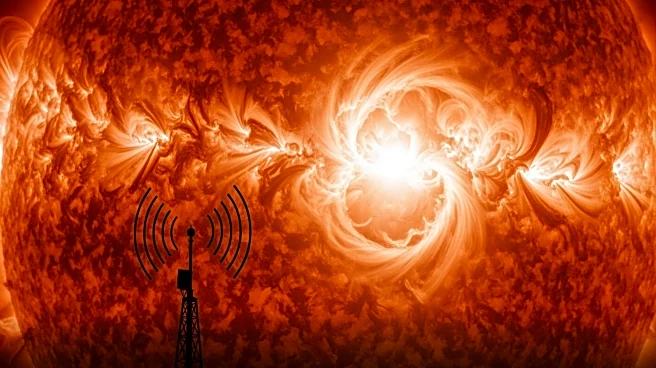
An intense X1.1-class solar flare erupted from the sun's sunspot region AR4298, causing temporary radio blackouts across Australia and parts of Southeast Asia. The flare, which peaked at 12:01 a.m. EST
on December 8, was accompanied by a coronal mass ejection (CME). However, early analyses suggest that the CME is not directed towards Earth. This solar activity is part of an already active week, with several CMEs expected to impact Earth, prompting geomagnetic storm watches.
Why It's Important?
Solar flares and their associated CMEs can have significant impacts on Earth's technological systems, including radio communications and power grids. The recent flare highlights the importance of monitoring solar activity to mitigate potential disruptions. Geomagnetic storms can also enhance auroral displays, providing opportunities for scientific study and public enjoyment. Understanding solar flares is crucial for preparing and protecting infrastructure from space weather effects.
What's Next?
Space weather forecasters at NOAA's Space Weather Prediction Center and the U.K. Met Office have issued geomagnetic storm watches, anticipating strong to moderate storming levels. These conditions could make the northern lights visible at higher latitudes. Continued monitoring of solar activity will be essential to predict and respond to further space weather events, ensuring the protection of communication systems and other technologies.