


What's Happening?
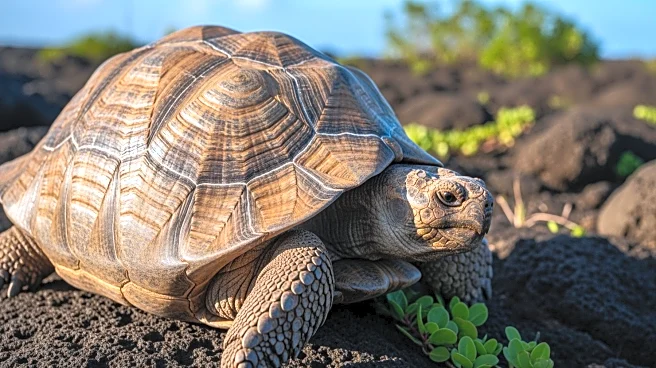
The Galápagos National Park has released 158 juvenile hybrid tortoises on Floreana Island, marking a significant step in restoring the island's ecosystem. These tortoises, aged between 8 to 13 years, are part of a larger plan to introduce 700 tortoises to the island.
The hybrids carry between 40% and 80% of the genetic makeup of the Chelonoidis niger, a species extinct for 150 years. The release coincides with the arrival of the season's first winter rains, providing a conducive environment for the tortoises to adapt. The initiative aims to gradually restore the genetic lineage of the extinct Floreana species, which was decimated by human activities and natural disasters over two centuries ago.
Why It's Important?
This initiative is crucial for biodiversity conservation and ecological restoration. By reintroducing tortoises with significant genetic ties to the original species, the project aims to revive the ecological balance of Floreana Island. The tortoises play a vital role in the ecosystem, influencing vegetation patterns and providing habitats for other species. The project also highlights the importance of genetic diversity in conservation efforts, as it seeks to restore a lost lineage. The success of this program could serve as a model for similar conservation efforts worldwide, emphasizing the role of genetic research in ecological restoration.
What's Next?
The gradual introduction of more tortoises will continue, with ongoing monitoring to assess their adaptation and impact on the ecosystem. The park authorities will also focus on managing threats from non-native species like rats and cats, which pose risks to the tortoises. Community involvement and education will be key in ensuring the long-term success of the project. The initiative may also prompt further research into genetic restoration techniques and their application in other conservation projects.