



What's Happening?
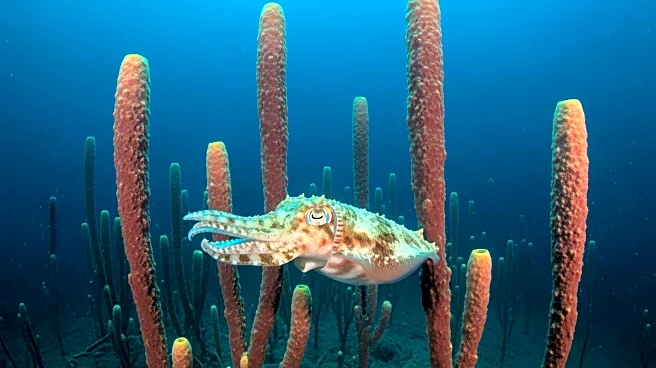
Researchers have documented a rare behavior in a deep-sea squid, observed masquerading as sponge stalks in the Clarion-Clipperton Zone of the Pacific Ocean. Using a remotely operated vehicle, the team captured footage of the squid, initially mistaken
for biogenic stalks, revealing its unique behavior of hiding under mud and emerging only when disturbed. This behavior, termed 'masquerading,' is believed to help the squid avoid predators or ambush prey. The discovery suggests that the abundance of such cephalopods may have been underestimated due to their effective camouflage. The study highlights the need for further research to understand the biodiversity and behaviors of deep-sea creatures, especially as these habitats face threats from ocean acidification and seabed mining.
Why It's Important?
The discovery of the squid's masquerading behavior underscores the complexity and adaptability of deep-sea life, challenging previous assumptions about the abundance and distribution of cephalopods in the abyssal plains. This finding is crucial for informing conservation strategies, as it reveals the potential for undiscovered biodiversity in these regions. The study also emphasizes the importance of unobtrusive research methods to accurately assess marine life, which is vital for developing effective management plans to protect these ecosystems from the impacts of climate change and resource extraction. Understanding these behaviors can aid in preserving marine biodiversity and ensuring sustainable use of ocean resources.
What's Next?
Further research is needed to explore the diversity and ecological roles of deep-sea cephalopods. Scientists aim to conduct more targeted studies using advanced camera technologies to minimize disturbance and gain a clearer understanding of these creatures' behaviors and habitats. This research is particularly urgent as deep-sea mining activities are expected to increase, potentially threatening these ecosystems. Conservationists and policymakers may use these findings to advocate for stricter regulations and protective measures to safeguard the deep-sea environment from human activities.