




What's Happening?
The U.S. Department of the Interior is set to release a new plan addressing the ongoing drought crisis affecting the Colorado River. This plan is expected to impose deeper water cuts on Arizona and its neighboring states, California and Nevada, as part of a short-term
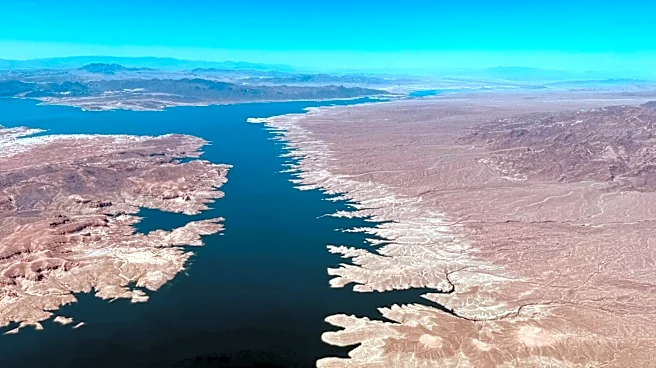
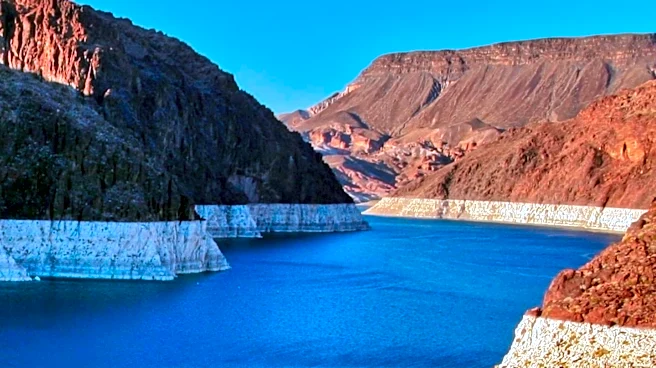
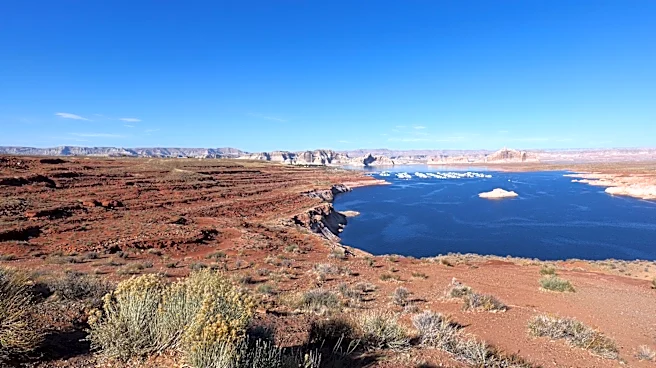
framework to manage the river's water shortage. The plan comes after the seven states that rely on the Colorado River failed to reach a consensus on how to share the necessary cutbacks. Arizona, California, and Nevada have proposed reducing their water usage from Lake Mead by at least 3.2 million acre-feet over two years, starting in 2027. This includes mandatory cuts and additional conservation efforts. The plan aims to stabilize Lake Mead and Lake Powell, which have seen significant depletion due to prolonged drought and overuse.
Why It's Important?
The Colorado River is a critical water source for millions of people and vast agricultural lands in the southwestern United States. The proposed water cuts are significant as they will impact water availability for urban areas and agriculture, particularly in Arizona, which has a lower priority for water allocation compared to California. The plan highlights the ongoing challenges of water management in the face of climate change and prolonged drought conditions. It underscores the need for collaborative efforts among states to ensure sustainable water use and the importance of federal intervention when regional agreements fail. The outcome of this plan could set a precedent for future water management strategies in the region.
What's Next?
The federal government will implement the new water management rules by October 1, 2027, when the current guidelines expire. The plan will be reviewed and updated every two years, allowing for adjustments based on changing conditions. The states involved may continue negotiations to reach a long-term agreement, but the immediate focus will be on adhering to the new federal guidelines. There is potential for legal challenges, particularly if the states cannot agree on the distribution of water cuts. The situation remains fluid, with the possibility of further federal intervention if the drought persists or worsens.