







What's Happening?
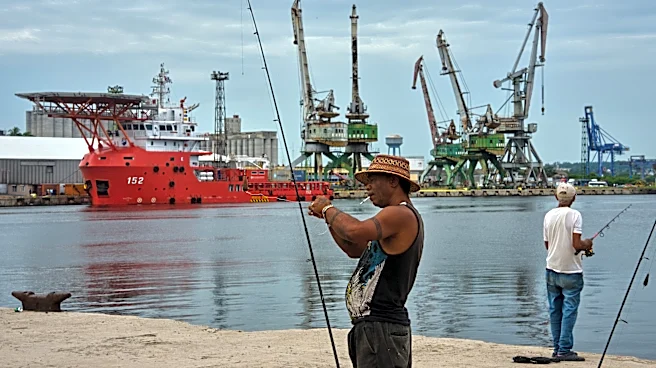
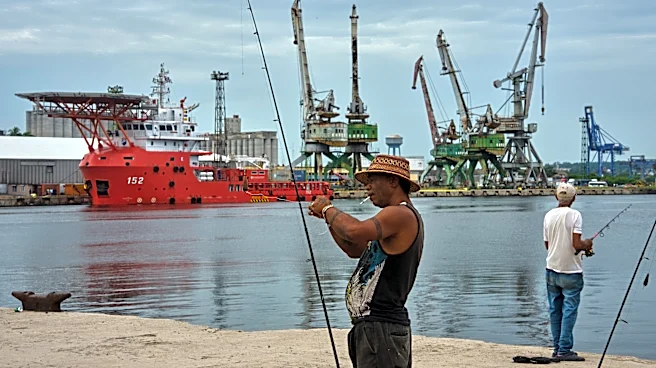
A ship from Colombia carrying nearly 100 tons of food and essential goods has docked in Cuba, providing much-needed relief amid ongoing economic challenges. This shipment is part of a broader humanitarian effort by several countries to support Cuba as it faces
fuel shortages and food insecurity, exacerbated by a U.S. oil blockade. Cuban President Miguel Díaz-Canel has announced a series of economic reforms aimed at attracting investment and involving Cubans abroad in the economy. These reforms are intended to decentralize parts of the country's administration and address the economic crisis.
Why It's Important?
The arrival of aid from Colombia highlights the international community's response to Cuba's economic difficulties, which have been intensified by U.S. sanctions. The economic reforms announced by President Díaz-Canel could potentially open up new avenues for investment and economic participation, both domestically and from the Cuban diaspora. However, the success of these reforms will depend on their implementation and the government's ability to navigate the political and economic pressures from the U.S. The situation underscores the complex interplay between international relations and domestic policy in Cuba.
What's Next?
As Cuba implements these economic reforms, the government will need to balance the need for foreign investment with maintaining political control. The reforms could lead to increased economic activity and potentially improve living conditions for Cubans. However, the ongoing U.S. sanctions pose a significant challenge, and the Cuban government will need to engage in diplomatic efforts to alleviate these pressures. The international community will be watching closely to see how these reforms unfold and their impact on Cuba's economic landscape.