






What's Happening?
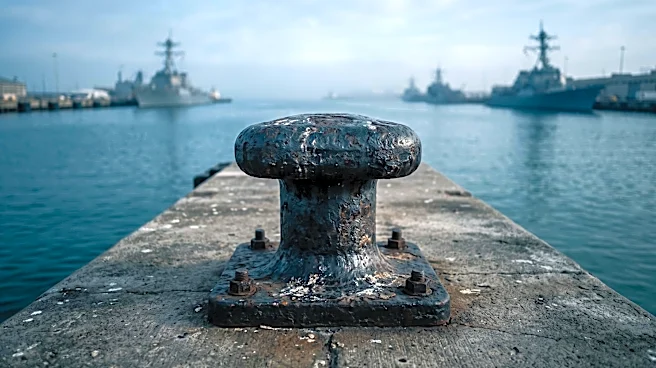
Japan is contemplating an exception to its long-standing 'Three Non-Nuclear Principles' by potentially allowing U.S. military warships carrying nuclear weapons to enter Japanese ports during emergency situations. This move is part of revisions to Japan's
three key national security documents, expected to be finalized by the end of 2026. The 'Three Non-Nuclear Principles,' articulated in 1967 and formally adopted in 1971, state that Japan will not possess, produce, or permit the introduction of nuclear weapons into its territory. While the first two principles are intended to remain, the Takaichi administration is considering explicitly stating exceptions to the 'no introduction' rule. This consideration stems from a belief that ensuring Japan's security, particularly under the U.S. nuclear umbrella, necessitates the temporary entry of U.S. ships with nuclear capabilities, especially given the increasingly harsh security environment in the Indo-Pacific region with nuclear-armed neighbors like China, Russia, and North Korea.
Why It's Important?
This potential policy shift by Japan holds significant implications for U.S. defense strategy and regional stability in the Indo-Pacific. For over 60 years, Japan has relied on the U.S. nuclear umbrella, but its self-imposed restrictions have created practical challenges for effective enforcement. Allowing U.S. nuclear-armed vessels to dock would enhance the credibility and operational flexibility of the U.S. nuclear deterrent in the region, potentially strengthening the alliance's ability to respond to threats. This move could also set a precedent for other U.S. allies in the Asia-Pacific, some of whom are also re-evaluating their nuclear doctrines. However, it could also further antagonize Beijing, which already views Japan's increasing defense budgets and re-militarization with apprehension. The decision reflects a broader trend among U.S. allies, including some European nations, to reconsider their nuclear policies in response to evolving global security landscapes.
What's Next?
The Japanese government plans to formally maintain all three non-nuclear principles while incorporating an explicit exception for the introduction of nuclear weapons in emergency scenarios within its revised security documents by the end of 2026. This decision will likely involve extensive internal debate within Japan and diplomatic discussions with the United States. The international community, particularly neighboring countries, will closely monitor these developments. The U.S. Navy's development of nuclear-armed Sea-Launched Cruise Missiles (SLCM-N) for Virginia-class attack submarines underscores the practical need for such port access, as current Japanese policy restricts these vessels. The outcome of Japan's policy review could influence the strategic deployment of U.S. nuclear assets and shape future defense cooperation in the Indo-Pacific.
Beyond the Headlines
The re-evaluation of Japan's 'Three Non-Nuclear Principles' touches upon profound ethical and historical considerations, particularly given Japan's unique experience as the only nation to have suffered atomic bombings. The shift reflects a pragmatic response to a deteriorating security environment, prioritizing national defense and alliance commitments over a strict adherence to a non-nuclear stance that some now view as unrealistic. This development could spark broader discussions about nuclear proliferation, the role of nuclear deterrence in modern geopolitics, and the balance between historical principles and contemporary security needs. It also highlights the evolving nature of alliances and the pressures faced by nations to adapt their defense postures in an increasingly complex and volatile world, potentially leading to a redefinition of what constitutes a 'non-nuclear' state in practice.