



What's Happening?
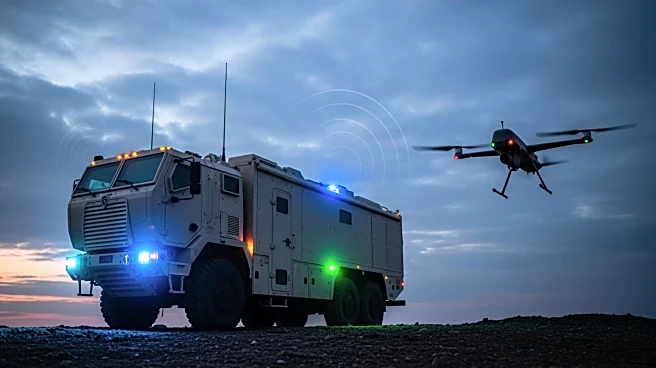
Sweden is addressing increasing threats from drones and GPS interference by investing $1.6 billion in mobile drone defense units. This initiative, announced by Swedish Minister of Defense Pål Jonson, aims to protect critical infrastructure and civilians
from aerial threats. The plan involves establishing multiple dispersed air defense units equipped with short-range weapons to defend against drones and cruise missiles. These units will be mobile and modular, allowing for flexibility in defense strategies. The decision follows a series of airspace breaches by unidentified drones near strategic sites in Sweden, including the Karlskrona archipelago and Gothenburg-Landvetter Airport. The Swedish Armed Forces have already tested several systems in 2025, which will expedite the adoption process. The government has tasked the Swedish Armed Forces and Civil Defense Agency with proposing both active and passive protective measures, expected to be compiled next month.
Why It's Important?
The investment in drone defense units is crucial for Sweden's national security, as it addresses the growing threat of unauthorized drone activity and GPS interference. This move reflects a broader trend among European countries to enhance airspace security, with nations like Lithuania and Germany also adopting laws to neutralize drones violating national airspace. The initiative is significant for Sweden's defense strategy, as it aims to protect vital infrastructure such as bridges, rail hubs, and power plants. The development of these defense units could also influence military procurement and international security policies across Europe. By enhancing its air defense capabilities, Sweden is positioning itself to better respond to modern aerial threats, which could have implications for regional stability and security.
What's Next?
The Swedish government is expected to place a consolidated order with industry in the first quarter of the year, following the successful testing of defense systems in 2025. The Swedish Armed Forces and Civil Defense Agency will compile proposals for protective measures, which will guide the implementation of the new defense units. As these units become operational, they will likely have the authority to engage hostile drones, potentially including shooting them down. The development of these units may prompt other European countries to enhance their own drone defense capabilities, leading to increased collaboration and information sharing on airspace security. Additionally, the focus on rapid detection and response to drone threats could drive technological advancements in sensor fusion and defense systems.
Beyond the Headlines
The establishment of mobile drone defense units in Sweden highlights the evolving nature of modern warfare and the increasing importance of technological innovation in national defense strategies. The focus on rapid detection and validation of drone threats underscores the need for advanced sensor technologies and disciplined workflows. This development could lead to ethical and legal discussions about the use of force against drones, particularly in civilian areas. The investment in drone defense also reflects a shift in military priorities, as nations adapt to new forms of aerial threats that challenge traditional defense systems. As countries like Sweden enhance their air defense capabilities, there may be broader implications for international security and defense cooperation.