







What's Happening?
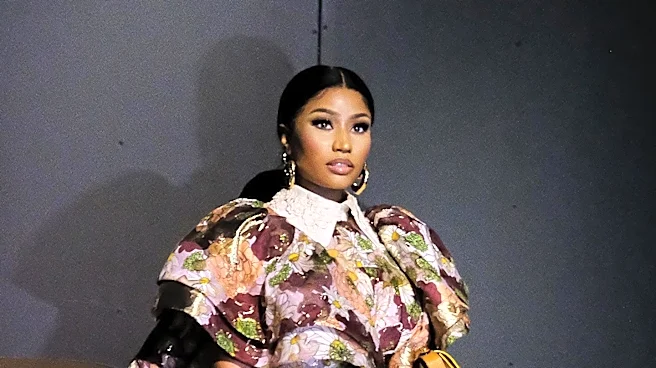
Trinidadian rapper Nicki Minaj has urged influential figures to speak out against the persecution of Christians in Nigeria. During an X Takeover event at Tesla's Giga Texas facility in Austin, Texas, Minaj highlighted her personal connection to Nigeria through
her pastor and her Nigerian fanbase. She expressed deep concern over the brutality faced by Christians in the country solely due to their faith, questioning why the issue receives insufficient attention. Minaj noted that sensitive topics are often avoided if they are not considered 'cool' to discuss. She hopes that more celebrities, public figures, and influencers will join her in raising awareness and advocating for the affected Christian community in Nigeria. Minaj also stated her intention to do more to support this cause.
Why It's Important?
Nicki Minaj's call for celebrity advocacy on Christian persecution in Nigeria is significant as it brings a human rights issue to a broader, U.S.-based audience through a prominent cultural figure. Her remarks, made at a high-profile event in Texas, leverage her platform to draw attention to international religious freedom concerns. This could potentially mobilize her substantial fanbase and other public figures in the U.S. to engage with the issue, influencing public opinion and potentially prompting greater diplomatic or humanitarian efforts. Increased awareness in the U.S. could lead to pressure on policymakers to address religious persecution in Nigeria, impacting foreign policy and aid decisions. For human rights organizations, celebrity involvement can amplify their message and attract resources, while for the affected communities in Nigeria, it offers a glimmer of hope for international recognition and support.
What's Next?
Following Nicki Minaj's public statements, it is anticipated that there may be increased discussion and scrutiny regarding Christian persecution in Nigeria within U.S. media and social circles. Other celebrities and influencers might be inspired to lend their voices, potentially leading to collaborative advocacy efforts or campaigns. Human rights organizations and religious freedom advocates may seek to partner with Minaj or leverage her statements to further their initiatives. There could also be a call for U.S. government officials to address the issue more directly in their foreign policy engagements with Nigeria. The impact will largely depend on the sustained engagement of Minaj and other public figures, as well as the response from international bodies and governments.
Beyond the Headlines
Minaj's intervention highlights the evolving role of celebrity activism in shaping public discourse on global human rights issues. By using her platform to address a topic often overlooked in mainstream entertainment, she challenges the notion that celebrities should only engage with 'cool' or popular causes. This could set a precedent for other artists to tackle complex and sensitive international matters, potentially broadening the scope of celebrity influence beyond domestic social issues. Furthermore, her remarks underscore the interconnectedness of global communities, demonstrating how personal connections (like her Nigerian pastor) can drive advocacy for distant humanitarian crises. This also raises questions about the responsibility of public figures to use their reach for social good and the potential for cultural diplomacy to influence international human rights agendas.