






What's Happening?
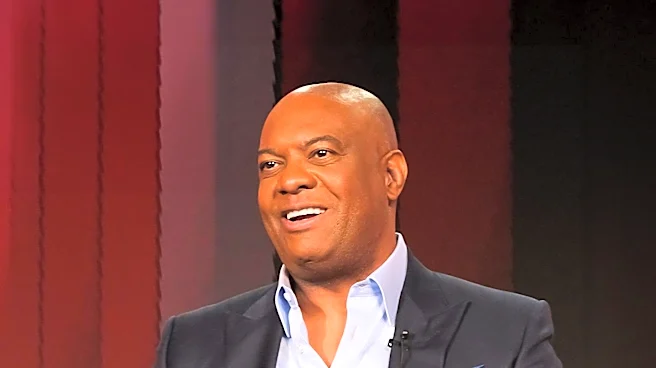
Fabián Padilla is currently an investigator for the International Panel on the Information Environment (IPIE). In addition to his role with IPIE, Padilla was a member of the Chilean Commission against Disinformation in 2023. He is the founder and director
of FastCheck.cl, a media outlet that received the Journalism of Excellence Award in 2019. Padilla is also a professor specializing in fact-checking and is a doctoral candidate in Communication Sciences, as well as a doctoral researcher at the Millennium Institute for Foundational Research on Data (IMFD). His professional focus is primarily on combating disinformation and verifying facts within the contemporary information ecosystem.
Why It's Important?
Fabián Padilla's involvement as an investigator for the International Panel on the Information Environment (IPIE) highlights the global effort to address the pervasive issue of disinformation. His background in fact-checking and his experience with Chile's Commission against Disinformation position him as a key contributor to understanding and mitigating the impact of false information. The IPIE's work is crucial for developing international standards and best practices that could influence how countries, including the U.S., approach information integrity. The U.S. faces significant challenges with disinformation, particularly concerning elections, public health, and social cohesion. Insights and methodologies developed by IPIE, with contributions from experts like Padilla, could provide valuable frameworks for U.S. policymakers, technology companies, and media organizations seeking to combat the spread of harmful narratives and promote a more accurate information landscape. This collaboration underscores the interconnectedness of global information challenges and the need for international cooperation.
What's Next?
As an investigator for the IPIE, Fabián Padilla will contribute to the panel's research and analysis, which aims to provide a comprehensive understanding of the information environment and its challenges. The IPIE's findings and recommendations are expected to inform international policy discussions and potentially lead to the development of new strategies for combating disinformation. For the U.S., this could mean the adoption of new approaches to content moderation, media literacy initiatives, or regulatory frameworks that align with international best practices. Padilla's expertise in fact-checking will be particularly relevant as the IPIE explores methods for verifying information and promoting journalistic integrity. The ongoing work of the IPIE, with contributions from experts like Padilla, will likely shape future dialogues on information governance and the responsibilities of various stakeholders in maintaining a healthy information ecosystem.
Beyond the Headlines
Padilla's role with the IPIE and his prior work with the Chilean Commission against Disinformation underscore a growing global consensus on the need for structured, multi-stakeholder approaches to address information pollution. This goes beyond simply identifying false information; it involves understanding the systemic factors that enable its spread and developing resilient societal responses. The ethical implications of artificial intelligence in generating and disseminating information, the psychological impact of echo chambers, and the erosion of trust in traditional media are all areas that such panels implicitly address. The long-term implications for the U.S. could include a re-evaluation of free speech principles in the context of widespread disinformation, increased investment in public education on media literacy, and potentially new forms of collaboration between government, tech companies, and civil society to safeguard democratic processes and public discourse from manipulation. This international effort signifies a shift towards proactive measures rather than reactive responses to information crises.