









What's Happening?
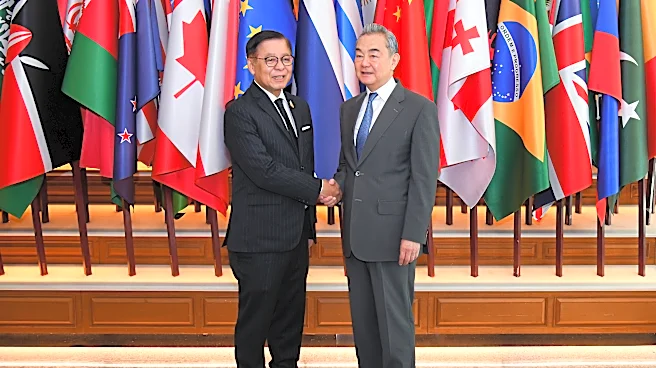
China's top diplomat, Foreign Minister Wang Yi, visited Myanmar's capital to meet with Min Aung Hlaing, the leader of Myanmar's military-backed government. This visit is part of a regional tour aimed at strengthening China's political, security, and strategic
ties in Southeast Asia. The discussions focused on enhancing Myanmar's international relations and cooperation within the Association of Southeast Asian Nations (ASEAN). China, a major trading partner and ally of Myanmar, has significant geopolitical and economic interests in the country, including investments in infrastructure and arms supply. The visit follows Min Aung Hlaing's controversial election as president, which critics argue was designed to maintain military power.
Why It's Important?
China's engagement with Myanmar underscores its strategic interests in Southeast Asia, particularly in maintaining influence over a key regional partner. This relationship is crucial for China's Belt and Road Initiative and its broader geopolitical ambitions. The visit also highlights China's role in regional stability, as it maintains ties with ethnic armed groups near its border and has brokered ceasefires in Myanmar. The strengthening of ties with Myanmar could impact regional dynamics, especially given the country's exclusion from ASEAN meetings due to its political situation. China's support for Myanmar's government may also affect international efforts to address human rights and democratic governance in the region.
What's Next?
China's continued support for Myanmar's military government may lead to further diplomatic engagements and economic investments. The international community, particularly ASEAN and Western nations, may respond with increased pressure on Myanmar to adhere to democratic norms and human rights standards. The situation could also influence regional security dynamics, as China balances its relationships with Myanmar and other Southeast Asian nations. Future developments may include additional diplomatic visits, economic agreements, and potential shifts in regional alliances.