






What's Happening?
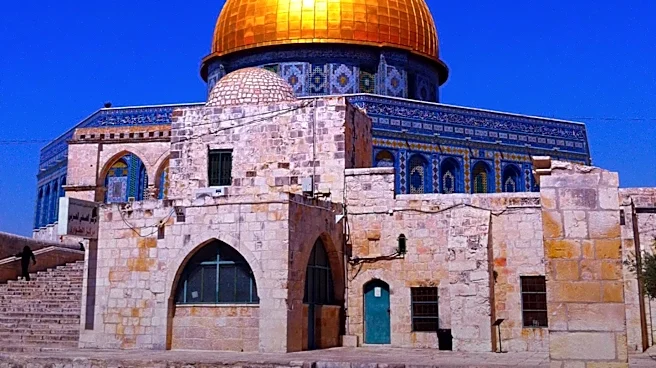
Jordan's Ministry of Foreign Affairs has strongly condemned the storming of the Al-Aqsa Mosque compound by Israeli minister Itamar Ben-Gvir and groups of extremist settlers, who were under the protection of Israeli police. The ministry, through its spokesperson
Fouad Majali, described the incident as a blatant violation of the historical and legal status quo at Al-Haram Al-Sharif, a desecration of its sanctity, and an unacceptable provocation. Majali reiterated Jordan's absolute rejection of such incursions by Israeli officials and extremists, emphasizing that these actions constitute a flagrant breach of international law and international humanitarian law. The ministry views these repeated incursions as an attempt to impose new realities at the mosque by seeking to divide it temporally and spatially. Jordan maintains that the entire 144-dunam area of Al-Aqsa Mosque is exclusively a Muslim place of worship, and the Jerusalem Awqaf and Al-Aqsa Mosque Affairs Department, affiliated with Jordan’s Ministry of Awqaf, holds exclusive jurisdiction over its administration and access.
Why It's Important?
This condemnation highlights the ongoing tensions surrounding religious sites in Jerusalem, particularly Al-Aqsa Mosque, which is a flashpoint in the Israeli-Palestinian conflict. Jordan's role as the custodian of Muslim and Christian holy sites in Jerusalem, as recognized by international agreements, makes its strong reaction significant. The repeated incursions by Israeli officials and settlers, facilitated by Israeli police, challenge this custodianship and are perceived as attempts to alter the delicate status quo. Such actions can inflame regional sentiments, potentially leading to wider instability. The international community is called upon to intervene, underscoring the global implications of these local events. The dispute over Al-Aqsa's status affects not only regional politics but also international efforts to maintain peace and stability in the Middle East, with potential repercussions for diplomatic relations and security alliances involving the U.S. and its allies.
What's Next?
Jordan has called on the international community to take a firm stance to compel Israel, as the occupying power, to halt its ongoing violations against Islamic and Christian holy sites in Jerusalem. This suggests that Jordan will continue to lobby international bodies and nations to pressure Israel to respect the historical and legal status quo. The continued incursions and provocative actions by Israeli officials and extremists are expected to maintain high tensions in the region. Further diplomatic efforts are likely to be pursued by Jordan and other Arab states to address these violations. The situation could escalate if these incursions continue, potentially leading to increased protests, clashes, and a further deterioration of relations between Israel and its neighbors, impacting regional stability and potentially drawing in international actors.
Beyond the Headlines
The repeated incursions into Al-Aqsa Mosque touch upon deeper issues of sovereignty, religious freedom, and historical claims in Jerusalem. Jordan's assertion that Israel has no sovereignty over occupied Jerusalem or its holy sites underscores a fundamental disagreement that goes beyond mere access. The attempts to 'divide it temporally and spatially' suggest a long-term strategy that could fundamentally alter the character of one of Islam's holiest sites. This situation also highlights the fragility of international agreements and the challenges of maintaining a delicate balance in a highly contested area. The ethical and legal dimensions of occupation and the protection of religious heritage are central to this conflict, with implications for how international law is applied and enforced in disputed territories. The ongoing tensions could also fuel extremist narratives on all sides, making a peaceful resolution even more challenging.