
What's Happening?
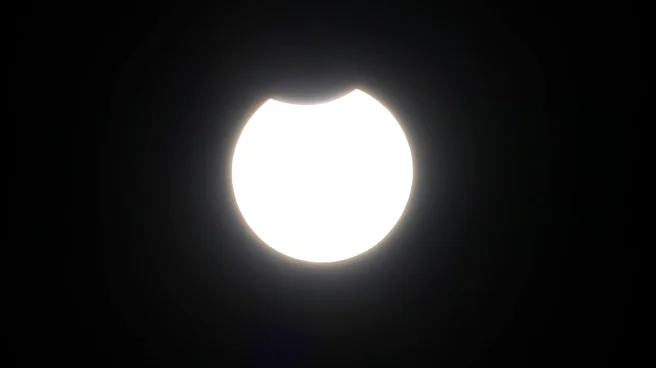
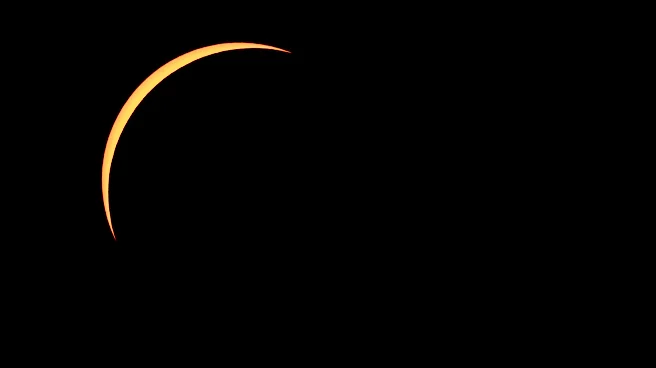
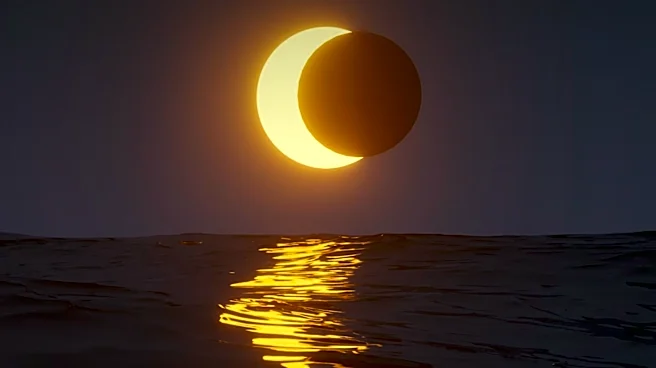
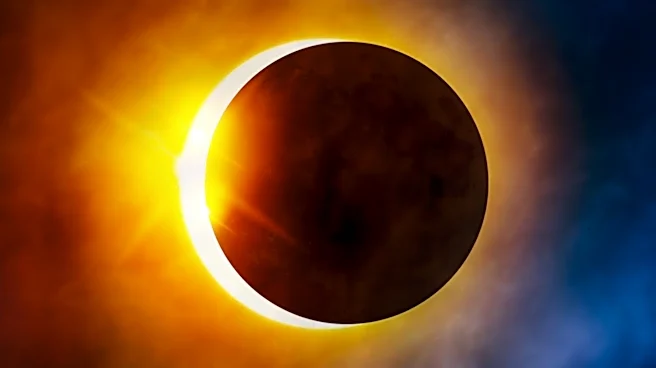
A total solar eclipse is set to occur, with partial visibility in parts of the United States and Canada. In the U.S., Alaska will experience the deepest eclipse, with Fairbanks seeing about 37% of the sun
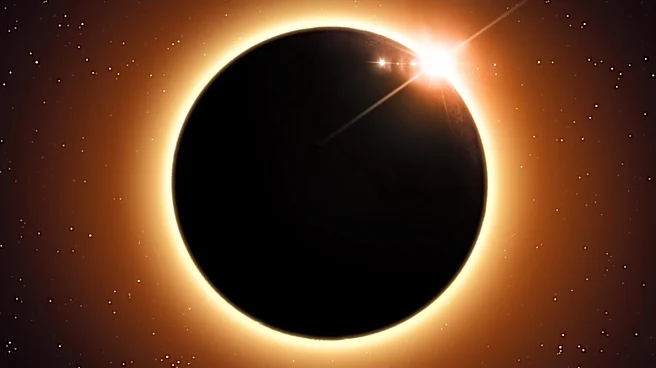
covered. Other parts of the country, such as Bangor, Maine, and New York, will see significantly less coverage. The eclipse will be more prominent in Europe, where it will be a total eclipse in some regions. The event is part of a natural astronomical phenomenon where the moon passes between the Earth and the sun, temporarily blocking sunlight.
Why It's Important?
Solar eclipses are significant astronomical events that attract widespread public interest and scientific study. They offer unique opportunities for education and engagement with science, as well as for research into solar and atmospheric phenomena. The partial visibility of the eclipse in the U.S. provides an opportunity for millions to witness a rare celestial event, fostering interest in astronomy and related sciences. Additionally, the event highlights the importance of safe viewing practices to prevent eye damage, emphasizing the need for public awareness and education.
What's Next?
As the eclipse approaches, educational institutions and scientific organizations are likely to increase outreach efforts to inform the public about safe viewing practices and the science behind eclipses. Live streams and broadcasts will provide access to those unable to view the eclipse in person. The next total solar eclipse will occur on August 2, 2027, crossing different regions, offering another opportunity for observation and study. Continued public interest in such events may lead to increased support for scientific research and education initiatives.