





What's Happening?
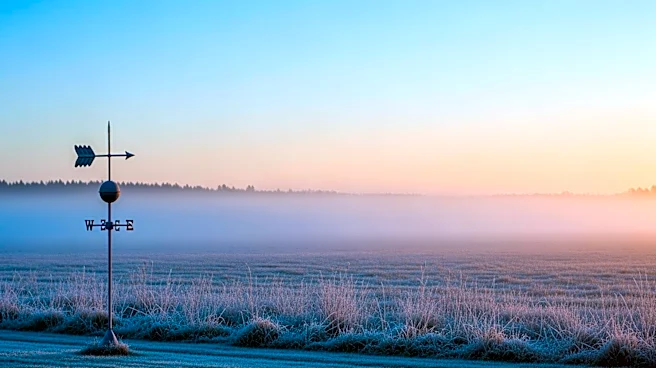
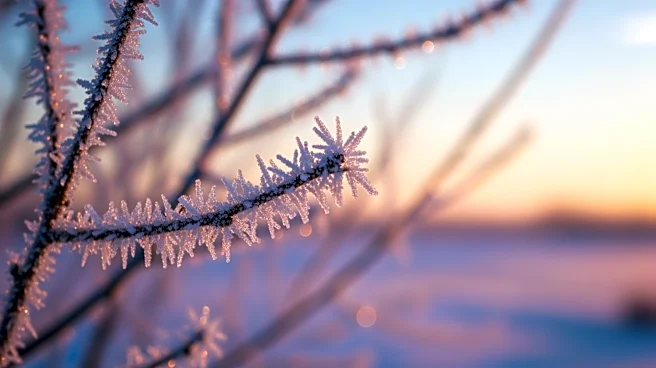
A freeze warning has been issued for Maryland, effective from midnight until 9 a.m. on Wednesday. This warning covers the entire WJZ viewing area, as temperatures are expected to drop significantly. The forecast predicts temperatures plunging into the mid and upper
20s outside the Baltimore Beltway and closer to 30°F within the city. Wind chills are anticipated to fall into the upper teens and lower 20s across northern and northeastern Maryland. The cold snap is attributed to a combination of clear skies, dry air, and calm winds, which facilitate a rapid temperature drop after sunset. Residents are advised to protect sensitive plants by covering them or moving them indoors. Despite the cold start, temperatures are expected to rise into the upper 40s and lower 50s by Wednesday afternoon, accompanied by sunny weather. Another cold morning is expected on Thursday, but fewer areas are likely to experience freezing temperatures.
Why It's Important?
The freeze warning is significant as it marks a late-season cold snap that could impact local agriculture and gardening. Sensitive plants and crops may be at risk of damage if not adequately protected, potentially affecting local farmers and gardeners. The warning also serves as a reminder of the unpredictable nature of spring weather in the region, which can fluctuate between warm and cold conditions. This weather pattern could influence local economic activities, particularly those related to outdoor events and agriculture. Additionally, the warning highlights the importance of staying informed about weather changes to mitigate potential risks to property and health.
What's Next?
Following the freeze warning, Maryland is expected to experience a warming trend. The weekend forecast predicts pleasant weather, with temperatures reaching the low to mid-70s on Saturday and upper 60s to lower 70s on Sunday. This warmer weather is likely to continue into the next workweek, with temperatures potentially reaching 90°F by mid-week. This shift to warmer conditions will be welcomed by residents and could encourage outdoor activities and events. However, it also underscores the need for continued vigilance in monitoring weather forecasts, as rapid changes can occur during the transitional spring season.