





What's Happening?
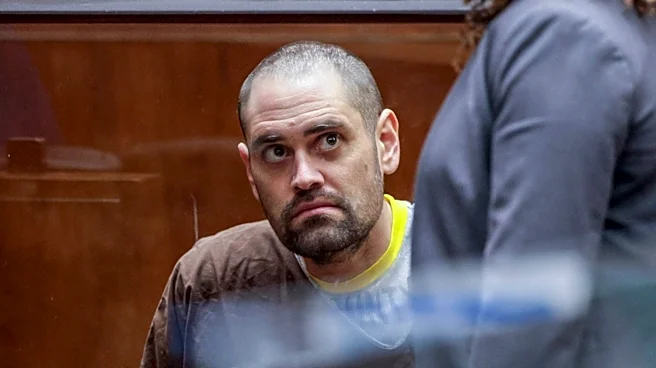
David Hoetzlein, a 25-year-old man from Camarillo, California, has been found not guilty by reason of insanity in the 2022 killing and dismemberment of his mother, Tomoko Hoetzlein. He admitted to killing her in their shared apartment and disposing of her remains
in a dumpster. Ventura County Chief Deputy Dist. Atty. Erin Meister stated that Tomoko Hoetzlein was a devoted mother who sought mental health treatment for her son. Two independent doctors evaluated David Hoetzlein and concluded that he met the legal criteria for a finding of not guilty by reason of insanity. Hoetzlein has a history of severe mental illness and had recently been released from a facility. His mother had previously contacted the hospital, his caseworker, and law enforcement regarding his condition before her death. As a result of the verdict, Hoetzlein will be placed in a maximum-security state mental hospital for treatment, facing a potential life term in confinement.
Why It's Important?
This case highlights the complex intersection of mental illness, criminal justice, and public safety. The finding of 'not guilty by reason of insanity' underscores the legal system's recognition that severe mental health conditions can impair an individual's capacity to understand the nature of their actions or distinguish right from wrong. It also brings to the forefront the challenges faced by families attempting to secure adequate mental health support for their loved ones, as evidenced by Tomoko Hoetzlein's efforts to help her son. The outcome of placing David Hoetzlein in a maximum-security state mental hospital emphasizes the dual goals of treatment and public protection. This case can spark broader discussions about the accessibility and effectiveness of mental healthcare systems, particularly for individuals with severe conditions, and the need for better support mechanisms for their families.
What's Next?
David Hoetzlein will be transferred to a maximum-security state mental hospital, where he will receive treatment for his severe mental illness. His confinement will be for a maximum term of life, subject to periodic reviews of his mental state and dangerousness. The legal system will continue to monitor his progress and determine if and when he might no longer pose a threat to himself or others. This case may prompt further scrutiny of mental health discharge protocols and the communication between healthcare providers, families, and law enforcement regarding individuals with severe mental health issues. Advocacy groups for mental health may use this case to push for reforms in mental healthcare funding, access, and support services for families. The community of Camarillo may also reflect on the incident's impact and the need for enhanced mental health resources.
Beyond the Headlines
This tragic case extends beyond the legal verdict to touch upon profound ethical and societal questions regarding culpability, compassion, and the limits of the justice system when confronted with severe mental illness. The mother's desperate attempts to secure help for her son before her death underscore a systemic failure to adequately support individuals with complex mental health needs and their caregivers. It raises questions about the balance between individual liberties and public safety, particularly when a person's mental state poses a risk. The 'not guilty by reason of insanity' defense, while legally sound in this instance, often sparks public debate about accountability and justice for victims. Ultimately, this case serves as a stark reminder of the devastating consequences of untreated severe mental illness and the urgent need for comprehensive, accessible, and integrated mental healthcare systems that can intervene effectively before tragedies occur.