





What's Happening?
The Church of Jesus Christ of Latter-day Saints has contributed more than $7 million to the American Red Cross. This significant donation is earmarked to bolster blood collection and disaster response efforts across the United States. Additionally, the Church provided
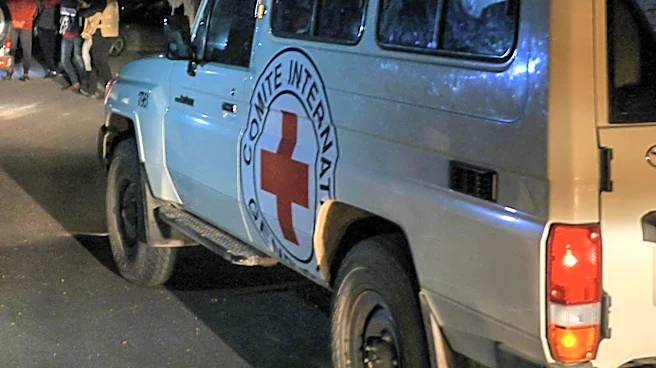
an extra $850,000 to support recovery operations in areas impacted by Super Typhoon Sinlaku in Asia. According to Church leaders, the funds will be utilized to expand vital blood services, enhance disaster response capabilities, and strengthen support for individuals affected by sickle cell disease. Specific allocations include $2.937 million for blood services medical equipment, $2 million for the Red Cross Sickle Cell Initiative, $800,000 for 50 additional Power Red blood collection machines, $710,000 for improvements and expansion of the Red Cross blood laboratory in Murray, and $600,000 for four emergency response vehicles. Presiding Bishop W. Christopher Waddell expressed gratitude for the opportunity to reinforce the American Red Cross's capacity to assist those facing serious illness and communities recovering from disasters.
Why It's Important?
This substantial donation from The Church of Jesus Christ of Latter-day Saints is crucial for the American Red Cross, significantly enhancing its ability to provide critical services nationwide. The investment in blood services medical equipment and Power Red blood collection machines will directly improve the efficiency and capacity of blood drives, addressing ongoing needs for blood supply. The dedicated funding for the Red Cross Sickle Cell Initiative is particularly impactful, as it targets a specific health disparity and aims to improve the quality of life for individuals living with this genetic disorder. Furthermore, the allocation for disaster response vehicles and laboratory expansion will strengthen the Red Cross's infrastructure, allowing for more rapid and effective aid delivery during emergencies. This partnership underscores the vital role of philanthropic organizations in complementing government and public health efforts, ensuring that essential services reach vulnerable populations and communities recovering from unforeseen crises. The Church's long-standing commitment, as evidenced by its history of blood drives and donations, highlights a model of sustained community support.
What's Next?
The American Red Cross will proceed with implementing the initiatives funded by this donation. This includes the procurement and deployment of new medical equipment for blood services, the expansion and upgrade of the blood laboratory in Murray, and the acquisition of additional emergency response vehicles. The Red Cross Sickle Cell Initiative will likely see an acceleration of its programs and outreach efforts, aiming to provide enhanced support and resources to those affected by the disease. The additional $850,000 for Super Typhoon Sinlaku relief operations will be directed towards ongoing recovery efforts in the affected Asian regions, focusing on immediate and long-term humanitarian aid. The Church of Jesus Christ of Latter-day Saints is expected to continue its partnership with the American Red Cross, building on a relationship that has seen the Church become a major contributor to blood drives and disaster relief. Future collaborations may involve further joint initiatives to address emerging humanitarian needs and strengthen community resilience.
Beyond the Headlines
This donation extends beyond immediate financial aid, symbolizing a deeper commitment to community welfare and humanitarian principles. The Church's emphasis on 'caring for our neighbors, lift burdens and bring hope' reflects a broader societal value of mutual support and compassion, particularly in times of crisis. The focus on sickle cell disease highlights a growing awareness and effort to address health inequities that disproportionately affect certain populations. By investing in infrastructure like blood laboratories and emergency vehicles, the donation contributes to the long-term sustainability and effectiveness of disaster preparedness and response systems, which are increasingly critical in the face of climate change and other global challenges. This philanthropic model, where large organizations partner with established aid groups, demonstrates an effective strategy for mobilizing resources and expertise to tackle complex humanitarian issues, fostering a sense of collective responsibility and resilience within communities.