



What's Happening?
Congressman Joe Courtney (CT-02), Ranking Member of the House Seapower and Projection Forces Subcommittee, recently voted in favor of a bipartisan continuing resolution (H.R. 6500). This resolution aims to fund the federal government through December
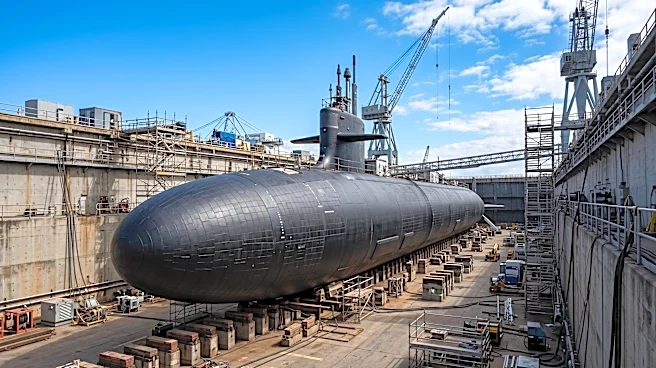
11, 2026. The bill, which passed the House with a vote of 370-48, includes a crucial allocation of $1.2 billion. This funding is specifically designated to support the ongoing construction of Virginia-class submarines and the initial two Columbia-class submarines, identified as the USS District of Columbia (SSBN 826) and the USS Wisconsin (SSBN 827). The Senate has already approved H.R. 6500, and it is now awaiting presidential signature to become law. Congressman Courtney highlighted that this measure is designed to prevent disruptions to the economy and essential government services, while also ensuring the continued progress of vital submarine construction projects. He noted that this resolution rectifies a previous partisan bill from July that had omitted the Navy's request for submarine funding.
Why It's Important?
The passage of H.R. 6500 is significant for several reasons, particularly for national security and economic stability. By funding the federal government through December 2026, it averts a potential government shutdown, which could have severe repercussions on the U.S. economy and the delivery of critical public services. The $1.2 billion allocated for submarine construction is vital for maintaining the strength of the U.S. Navy's fleet, specifically the Virginia-class and Columbia-class submarines. These submarines are key components of the nation's defense strategy, and consistent funding ensures their timely development and deployment. Furthermore, this investment supports the shipbuilding industry and its extensive supply chain, fostering job creation and economic activity within the industrial base. The resolution's bipartisan nature also signals a willingness among lawmakers to collaborate on essential government functions, despite previous partisan disagreements over funding, particularly concerning defense projects.
What's Next?
With the House and Senate having passed H.R. 6500, the next step is for the bill to be signed into law. Once enacted, the federal government will be funded through December 11, 2026, providing stability for various government operations and services. The $1.2 billion for submarine construction will be released, allowing shipbuilders and the industrial base to continue ramping up hiring and supply chain investments for the Virginia-class and Columbia-class submarines. This sustained funding is expected to keep these critical defense projects on schedule, following the historic construction contract awards in July for nine Block VI Virginia-class submarines and five Build II Columbia-class submarines. The focus will now shift to the effective allocation and utilization of these funds to ensure the efficient progress of submarine development and to avoid any future disruptions to these vital programs.
Beyond the Headlines
This bipartisan continuing resolution underscores a broader recognition of the strategic importance of naval power and the industrial base that supports it. The emphasis on funding submarine construction, particularly the Columbia-class, highlights the long-term commitment to maintaining a robust nuclear deterrent and advanced naval capabilities. Beyond the immediate economic and defense implications, this legislative action reflects the ongoing challenge of balancing fiscal responsibility with national security priorities. The initial omission of submarine funding in a previous partisan bill, as noted by Congressman Courtney, reveals the political complexities and potential vulnerabilities in defense spending. The successful passage of this corrected resolution suggests a consensus on the necessity of these programs, potentially setting a precedent for future bipartisan cooperation on critical defense investments and government funding, thereby strengthening national security and economic stability.