



What's Happening?
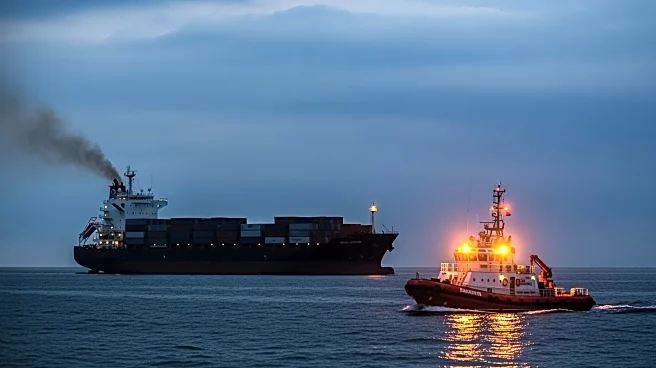
Estonia has conducted a significant maritime security operation in the Gulf of Finland, detaining a Bahamas-flagged container ship named Baltic Spirit. The operation, which took place on February 3, involved multiple Estonian agencies, including police
special forces, naval vessels, and aerial support. The ship was intercepted while en route to St. Petersburg, Russia, and all 23 crew members, identified as Russian citizens, were detained. The Estonian authorities, including the Police and Border Guard Board, the Transport Administration, the State Fleet, and the Tax and Customs Board, participated in the operation. The Estonian Navy provided support with vessels Raju and Admiral Cowan, and a rescue helicopter offered aerial cover. The detention was based on suspicions of smuggling, not due to any European Union sanctions, as the ship is not part of Russia's 'shadow fleet.' An investigation is underway to determine the nature of the suspected violations.
Why It's Important?
This operation underscores Estonia's heightened vigilance in the Gulf of Finland, a critical maritime corridor in Europe. The region has seen increased security measures following incidents like the 2023 damage to the Balticconnector gas pipeline. The detention of the Baltic Spirit highlights Estonia's proactive stance in preventing smuggling and ensuring maritime security. This action could have broader implications for regional security dynamics, especially concerning Russia's maritime activities. The operation also demonstrates Estonia's capability to conduct complex maritime interdictions, involving a coordinated effort across multiple agencies. This could serve as a deterrent to illegal activities in the region and reinforce Estonia's role in maintaining security in the Baltic Sea area.
What's Next?
The ongoing investigation will focus on uncovering the specifics of the suspected smuggling activities. Depending on the findings, there could be legal proceedings against the crew or the shipping company. The outcome may influence future maritime security operations in the region. Additionally, Estonia's actions might prompt responses from Russia, potentially affecting diplomatic relations. The situation could also lead to increased collaboration among Baltic Sea nations to enhance security measures against smuggling and other illegal maritime activities.