







What's Happening?
Former National Park Rangers, known as the Resistance Rangers, are actively countering the removal of a Black history exhibit at Harpers Ferry National Historic Park, which was ordered by President Trump. The exhibit, planned by former ranger Elizabeth
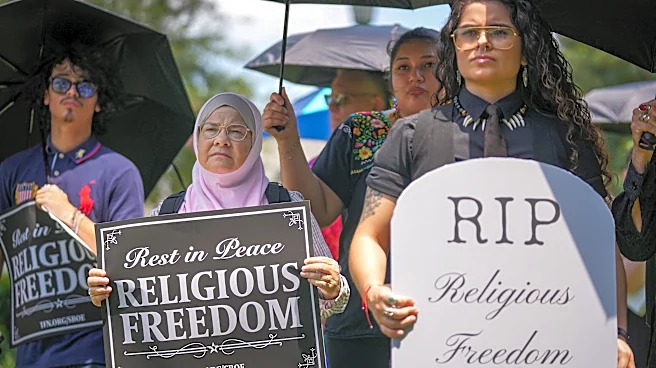
Kerwin, was intended to highlight the contributions of enslaved people linked to the site. However, it was removed following an executive order by President Trump aimed at 'restoring truth and sanity to American history.' In response, the Resistance Rangers have organized public education campaigns and protests to preserve and share the stories that were excluded. They launched their efforts on Juneteenth, a federal holiday commemorating the end of slavery in Texas, to emphasize the importance of Black history.
Why It's Important?
The removal of the Black history exhibit and similar actions have sparked significant controversy and legal challenges, highlighting ongoing debates about how American history is presented and remembered. The Resistance Rangers' efforts underscore the importance of inclusive historical narratives that recognize the contributions and struggles of marginalized communities. This situation reflects broader societal tensions regarding historical interpretation and the role of public institutions in shaping collective memory. The actions taken by the Resistance Rangers aim to ensure that diverse perspectives are included in national commemorations, which is crucial for fostering a more comprehensive understanding of American history.
What's Next?
The Resistance Rangers plan to continue their advocacy by organizing further protests and educational events. A federal judge has ordered the reinstatement of removed exhibits, including those related to Black history, by July 4th, in time for the nation's 250th anniversary celebrations. This legal decision mandates the Department of the Interior to restore historical materials at federal sites, potentially reversing some of the changes implemented under President Trump's executive order. The outcome of these efforts could influence future policies regarding historical exhibits and the representation of diverse narratives in public spaces.