
What's Happening?
Recent studies highlight the potential threat posed by lesser-known, dormant volcanoes around the world. These 'hidden' volcanoes, often overlooked due to their inactivity, can erupt unexpectedly, causing
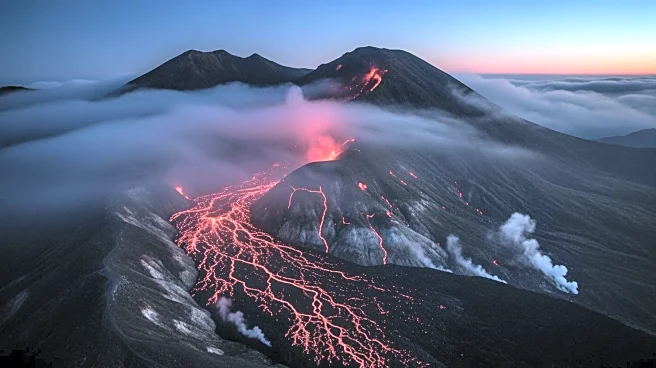
widespread environmental and societal impacts. The Hayli Gubbi volcano in Ethiopia recently erupted for the first time in recorded history, sending ash plumes into the sky and affecting regions as far as Yemen and northern India. Historical examples, such as the 1982 eruption of El Chichón in Mexico, demonstrate the far-reaching consequences of such eruptions, including climate shifts and humanitarian crises. Despite these risks, global investment in monitoring and research of these volcanoes remains insufficient.
Why It's Important?
The eruption of dormant volcanoes can have catastrophic effects, not only locally but globally. The ash and gases released can alter climate patterns, leading to droughts and famines, as seen in the aftermath of the El Chichón eruption. The lack of monitoring and preparedness for these events poses a significant risk to global stability, particularly in regions already vulnerable due to poverty and conflict. Increasing awareness and investment in volcanology could mitigate these risks, potentially saving lives and preventing economic and environmental disasters.
What's Next?
Efforts are underway to improve monitoring and preparedness for volcanic eruptions. The Global Volcano Risk Alliance has been established to enhance anticipatory measures and strengthen monitoring capabilities. Collaboration between scientists, policymakers, and humanitarian organizations is crucial to address the gaps in current volcanic risk management. Proactive measures, rather than reactive responses, are essential to prevent future crises caused by hidden volcanoes.
Beyond the Headlines
The underestimation of dormant volcanoes highlights a broader issue of human bias in risk assessment. The tendency to focus on well-known threats while neglecting less visible ones can lead to inadequate preparedness. This pattern is evident in the disproportionate attention given to famous volcanoes compared to lesser-known ones. Addressing these biases and investing in comprehensive monitoring systems could significantly enhance global resilience to volcanic disasters.