



What's Happening?
Asian stock markets experienced declines on Monday morning, driven by concerns over rising oil prices and the ongoing conflict between the U.S. and Iran. The Nikkei 225 in Japan fell by 4.5%, while other major indices such as Australia's S&P/ASX 200,
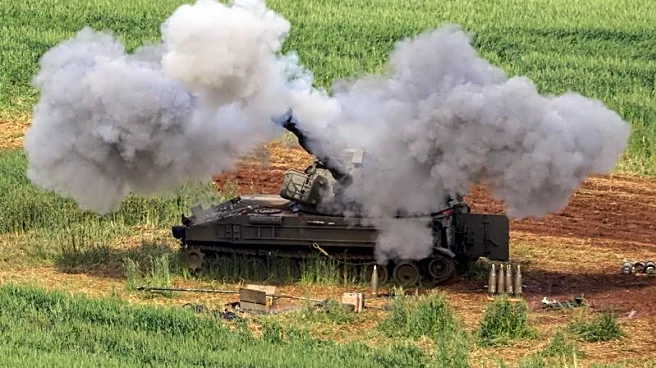
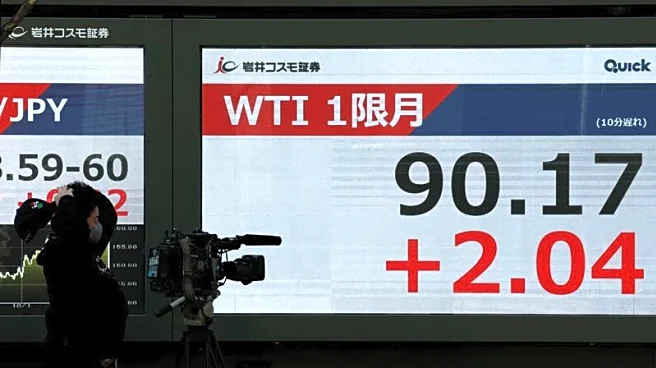
South Korea's Kospi, and Hong Kong's Hang Seng also saw significant drops. The conflict has disrupted access to the Strait of Hormuz, a critical passage for oil shipments, causing oil prices to soar. U.S. crude oil prices increased by $2.28 to $101.92 per barrel, and Brent crude rose by $2.88 to $115.45 per barrel. The situation has led to heightened volatility in global markets, with investors bracing for potential inflation and economic slowdown in Asia.
Why It's Important?
The escalation of the U.S.-Iran conflict and the resulting surge in oil prices have significant implications for global economic stability. Asia, heavily reliant on oil imports through the Strait of Hormuz, faces potential economic challenges if the conflict persists. Rising oil prices contribute to inflationary pressures, affecting consumer prices and business costs. The situation also impacts global stock markets, with major indices experiencing declines. The uncertainty surrounding the conflict and its duration adds to market volatility, influencing investment decisions and economic forecasts. The developments underscore the interconnectedness of geopolitical events and global economic health.
What's Next?
Investors and market analysts are closely monitoring the situation, anticipating further volatility in the near term. President Trump's decision to extend the deadline for military action against Iran to April 6 may provide temporary relief, but the potential for escalation remains. Economic stakeholders are preparing for possible long-term impacts, including sustained high oil prices and inflation. Governments and businesses may need to adjust strategies to mitigate risks associated with the conflict. The situation could prompt diplomatic efforts to resolve tensions and stabilize oil markets, influencing future economic policies and international relations.