





What's Happening?
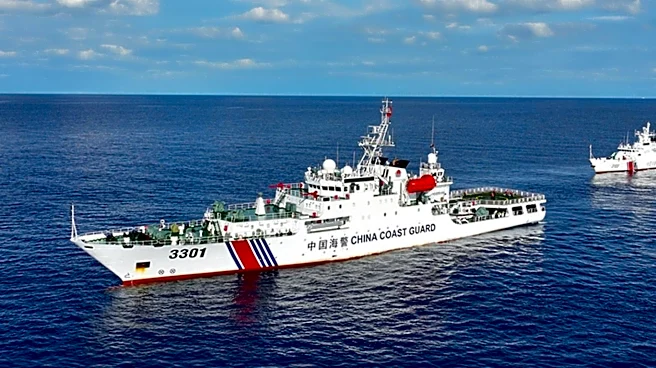
According to an analysis by Windward MIOC, Chinese research vessels nearly doubled their survey time around Taiwan in 2026 compared to the previous year. From January to September 2026, working time within 300 nautical miles of Taiwan rose from 3,862
hours to 7,411 hours. This increase was observed on both the Taiwan, Japan, and Philippines side, as well as the mainland side, while the overall fleet working time remained relatively stable. The surge in activity also extended to areas near Japan's southwestern islands, where slow-speed working time increased approximately eightfold, aligning with Japan Coast Guard reports of unauthorized survey activities. This intensified presence follows a broader trend where the northern South China Sea's share of fleet working time increased from 22% in 2019–21 to 41% in 2023–25, primarily driven by China Geological Survey and academic vessels focusing on offshore oil, gas, and gas-hydrate areas.
Why It's Important?
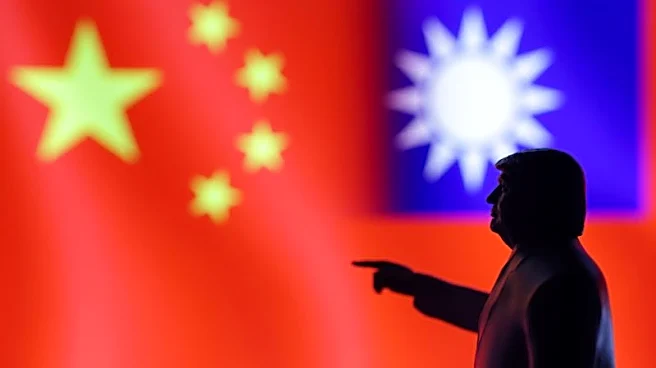
This significant increase in Chinese research vessel activity around Taiwan carries substantial geopolitical implications for regional stability and international relations. The heightened presence could be interpreted as a form of grey-zone coercion, aimed at asserting China's territorial claims and testing the resolve of Taiwan and its allies. The timing of much of this increase, following Japan and the Philippines' announcement of maritime boundary negotiations east of Taiwan—which Beijing deemed illegal—suggests a potential link to China's broader strategy to counter perceived challenges to its sovereignty. For the U.S. and its allies in the Indo-Pacific, this development underscores the growing assertiveness of China and the potential for increased tensions in critical maritime pathways. The data also highlights China's dual-use strategy, where ostensibly scientific research vessels can gather intelligence and map strategic underwater terrain, which could have military applications.
What's Next?
The immediate next steps involve monitoring Chinese research vessel activity through the winter of 2026 and into the spring of 2027 to determine if the increased presence around Taiwan represents a sustained reallocation of effort or a recurring seasonal field program. Continued observation will be crucial for understanding China's long-term intentions in the region. International reactions are likely to include increased surveillance by regional navies and coast guards, potentially leading to more frequent encounters and diplomatic protests. The U.S. and its allies may also consider further strengthening their security cooperation and joint exercises in the Indo-Pacific to deter any escalatory actions. The ongoing maritime boundary negotiations between Japan and the Philippines, which Beijing has already criticized, will likely remain a point of contention, potentially influencing future Chinese maritime behavior.
Beyond the Headlines
Beyond the immediate implications, the increased activity of Chinese research vessels points to a broader strategic competition for maritime dominance and resource control in the Indo-Pacific. The data suggests that China is systematically expanding its understanding of the underwater environment, which is critical for both resource extraction and potential submarine warfare. This could lead to a long-term shift in naval power dynamics, as detailed seabed mapping and acoustic modeling capabilities provide significant strategic advantages. Ethically, the unauthorized survey activities reported by the Japan Coast Guard raise questions about international maritime law and freedom of navigation. The dual-use nature of these research vessels blurs the lines between scientific exploration and military intelligence gathering, posing a complex challenge for international governance and transparency in maritime affairs. This trend could also accelerate a regional arms race, as nations seek to enhance their own maritime surveillance and defense capabilities.