



What's Happening?
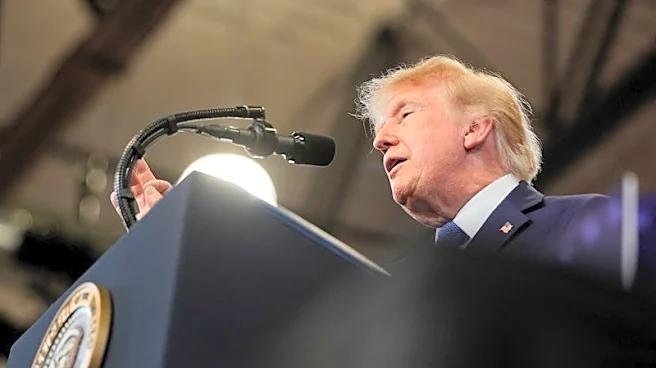
President Trump announced the successful release of former U.S. Marine Robert Gilman from Russian imprisonment after more than four years. Gilman, a teacher from Massachusetts, was arrested in January 2022 and sentenced to ten years for allegedly assaulting
a police officer and attacking prison staff, charges he disputes. Video evidence reportedly shows Gilman knocking a jailer to the ground after being prodded. During his incarceration, Gilman endured severe beatings and physical abuse, described as being 'on death's door' upon his release. He is currently receiving treatment at Brooke Army Medical Center in San Antonio. Senior Director for Counterterrorism Sebastian Gorka and Middle East Special Envoy Steve Witkoff accompanied Gilman on his return trip. President Trump stated that Gilman's release was secured on a humanitarian basis following discussions with President Vladimir Putin, with no prisoner exchange involved. This marks the 109th American hostage freed since the beginning of President Trump's second term.
Why It's Important?
The successful, non-exchange release of Robert Gilman from Russian custody underscores a significant foreign policy approach by the Trump administration regarding American citizens detained abroad. This event highlights a commitment to bringing Americans home without making concessions, such as prisoner swaps or financial transactions, which have been criticized in past administrations for potentially incentivizing further hostage-taking. The administration's emphasis on securing releases without exchanges aims to deter adversarial nations from using American citizens as political pawns. This approach contrasts with previous instances, such as the Biden administration's exchange of Brittney Griner for convicted Russian arms dealer Viktor Bout, and a deal with Iran involving unfreezing $6 billion in assets for five American hostages. The Trump administration's strategy seeks to project strength and an unwavering commitment to its citizens, potentially influencing how foreign governments perceive the consequences of detaining Americans. The return of Gilman, along with Marc Fogel and Ksenia Karelina from Russia under President Trump's leadership, reinforces this policy.
What's Next?
The Trump administration has indicated its continued efforts to secure the release of all other unjustly detained Americans globally. Secretary of State Marco Rubio affirmed that the administration is 'still seeking the immediate return of all other unjustly detained Americans.' This suggests a sustained focus on diplomatic and strategic initiatives to bring home the remaining U.S. citizens held overseas. The success in Gilman's case, achieved without a prisoner exchange, may serve as a precedent or a model for future negotiations. Adversarial nations will likely observe this approach closely, potentially reassessing their strategies for detaining U.S. citizens. The administration's consistent stance against concessions could lead to more complex and protracted negotiations in some cases, while in others, it might encourage humanitarian releases to avoid prolonged diplomatic pressure. The ongoing efforts will test the effectiveness of this 'America First' agenda in diverse international contexts.
Beyond the Headlines
The release of Robert Gilman without a prisoner exchange carries deeper implications for international relations and the perceived value of American citizenship abroad. By refusing to engage in swaps, the Trump administration aims to de-incentivize the practice of foreign governments detaining Americans for political leverage. This policy could reshape the dynamics of international hostage diplomacy, potentially reducing the perceived 'currency' of American citizens in geopolitical bargaining. However, it also raises questions about the potential for prolonged detentions if no concessions are made, and the moral dilemmas faced by administrations when a citizen's freedom hinges on such decisions. The emphasis on humanitarian grounds for Gilman's release, as stated by President Trump, highlights a diplomatic pathway that avoids direct quid pro quo, offering a nuanced approach to complex international incidents. This strategy reinforces the idea that the U.S. will not abandon its citizens but will also not reward hostile actions, thereby attempting to establish a new norm in international conduct regarding detained individuals.