









What's Happening?
The Yale School of Medicine (YSM) has been awarded a grant of nearly $25 million by the Aligning Research to Impact Autism (ARIA) initiative. This significant funding, part of ARIA's Human Developmental Neurobiology Research Hub, is dedicated to creating
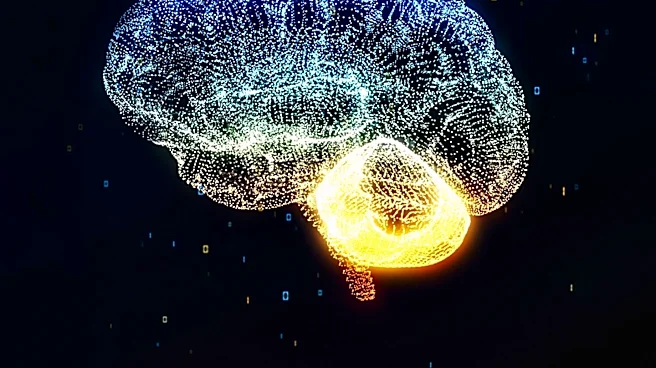
foundational maps and models of the developing human brain. The primary goal is to clarify how and when autism diverges from typical development. The research, co-led by Nenad Sestan, MD, PhD, and Paola Arlotta, PhD, aims to address the current lack of a high-resolution, time-lapse map of the developing human brain. This gap makes it challenging for scientists to pinpoint mechanisms, identify early-life deviations, or design interventions that are tailored to an individual's biology at specific developmental stages. The grant will support two key projects at YSM: developing a high-resolution map of the developing brain's wiring and creating a cellular and molecular model to understand autism's divergence from typical development. These projects are part of a broader four-project collaboration that also includes Harvard University, which will explore patient-derived brain organoids and generative AI for intervention prediction.
Why It's Important?
This substantial grant is critical for advancing autism research and understanding early brain development. Autism, affecting approximately 1 in 31 children in the United States, presents significant challenges in communication, social interaction, and behavior. The current lack of detailed developmental brain maps hinders the ability to detect autism early and develop precise interventions. By creating a high-resolution, time-lapse map of the developing brain, researchers can gain unprecedented insights into the neural circuits and their formation. This will allow for a more accurate identification of when and how autism-related differences first manifest, which is crucial given that many neurons and synaptic circuits form in the first years of life. The project's focus on cellular and molecular models will help clarify the biological underpinnings of autism, moving beyond observational studies to mechanistic understanding. This foundational knowledge is expected to guide earlier detection, lead to the discovery of clearer biomarkers, and inform more precise and effective interventions for individuals with autism and their families, ultimately improving their quality of life.
What's Next?
The immediate next steps involve the coordinated execution of the research projects at Yale School of Medicine and in collaboration with Harvard University. This will include integrating experiments, advanced imaging techniques, computational analysis, and clinical partnerships to build the foundational brain maps and models. The two specific projects at YSM—creating a high-resolution brain wiring map and a cellular/molecular model of autism divergence—will be central to this effort. The broader collaboration with Harvard will also focus on developing patient-derived brain organoids to link genetics, development, and clinical features, and utilizing generative AI to predict interventions and prioritize therapeutic targets. The long-term vision is for this research to accelerate discovery, improve early detection methods, and inform more effective interventions for autism. The findings are expected to create knowledge that extends beyond Yale, influencing the broader scientific community and clinical practice in neurodevelopmental conditions. Continued philanthropic support and inter-institutional collaboration will be vital for the sustained progress of this ambitious 'scientific moonshot' in early brain development.
Beyond the Headlines
The Yale grant represents a significant investment in understanding the fundamental biology of brain development, moving beyond symptomatic treatments for autism. The concept of a 'scientific moonshot' for early brain development underscores the complexity and long-term nature of this research. Beyond the immediate goal of autism research, the high-resolution brain maps and cellular models developed could have broader implications for understanding other neurodevelopmental and neurological disorders. The integration of generative AI in this research is particularly noteworthy, as it signifies a growing trend in leveraging advanced computational tools to analyze complex biological data and predict outcomes. This could revolutionize drug discovery and personalized medicine for neurological conditions. However, ethical considerations surrounding the use of patient-derived organoids and AI in medical research, particularly concerning data privacy and the potential for algorithmic bias, will need careful navigation. The project also highlights the importance of interdisciplinary collaboration, bringing together experts in neuroscience, genetics, stem cell biology, and computer science to tackle complex biological challenges.