








What's Happening?
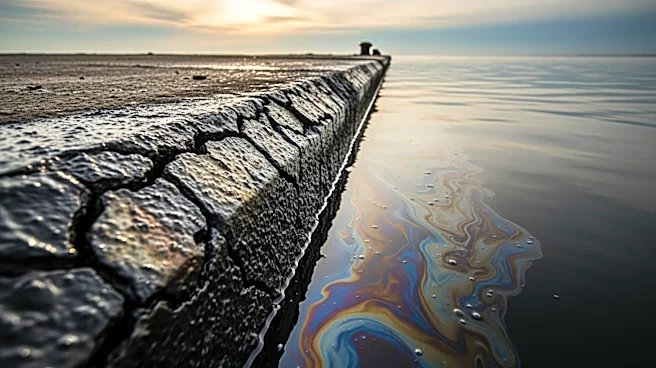
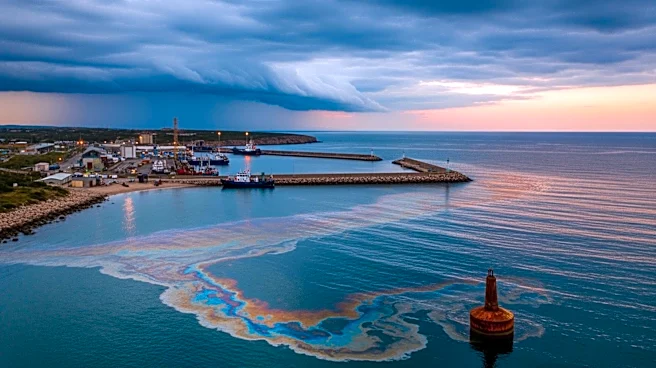
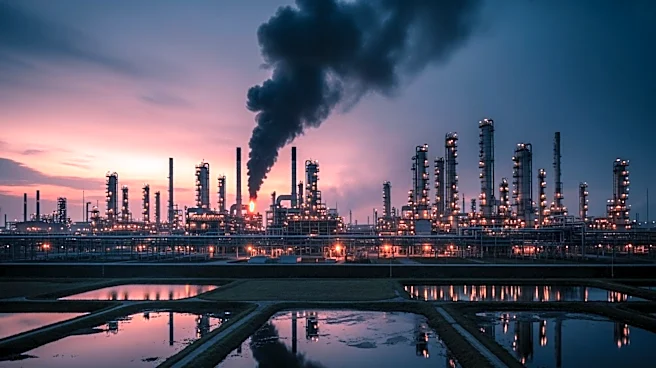
Ukrainian drones have targeted the Russian Black Sea port of Tuapse for the fourth time in recent weeks, exacerbating an environmental disaster. The attacks have resulted in toxic smoke clouds and oil spills along the coastline, affecting the popular
resort area. Russian authorities are engaged in extensive cleanup efforts, having removed over 13,300 cubic meters of contaminated material. The strikes have disrupted operations at the port and refinery, a key hub for Russian oil exports. Meanwhile, Ukraine continues to face drone attacks from Russia, with significant damage reported in various regions, including Ternopil and Odesa.
Why It's Important?
The ongoing conflict between Ukraine and Russia is not only a military confrontation but also poses significant environmental risks. The repeated drone strikes on Tuapse highlight the vulnerability of critical infrastructure and the potential for long-term ecological damage. This situation underscores the broader implications of the war, affecting regional stability and international energy markets. The environmental impact could have lasting effects on local communities and ecosystems, complicating recovery efforts and international relations.
What's Next?
Ukraine plans to reform its military to address manpower shortages and improve conditions for soldiers, reflecting the ongoing challenges in sustaining its defense efforts. The environmental crisis in Tuapse may prompt international calls for accountability and increased pressure on both Russia and Ukraine to mitigate the damage. The conflict's continuation could lead to further infrastructure attacks, with potential repercussions for global energy supplies and environmental health.