








What's Happening?
A recent survey by the Federal Reserve Bank of New York indicates that food insecurity in the United States has increased significantly, surpassing levels seen during the COVID-19 pandemic. The survey, conducted in February, reveals that 10% of families
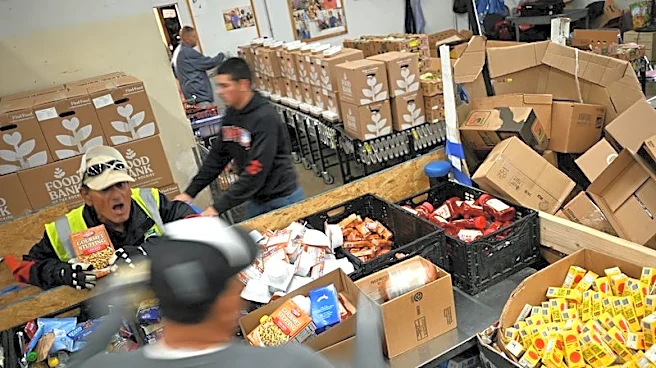
nationwide reported missing meals due to lack of food, with nearly 16% relying on food donations. The situation is more severe among families earning less than $50,000 annually, where nearly 20% are forced to skip meals. The Community Food Bank of Central Alabama is expanding to meet the growing demand, highlighting the widespread nature of the issue. The survey results suggest a 'K-shaped economy,' where economic recovery is uneven, leaving many households in financial distress. The end of government relief payments and rising food prices have exacerbated the problem, with more families now relying on Supplemental Nutrition Assistance Program (SNAP) benefits.
Why It's Important?
The increase in food insecurity underscores the ongoing economic challenges faced by many Americans, despite broader economic recovery. The disparity in economic well-being, as highlighted by the 'K-shaped economy,' suggests that while some sectors and individuals are thriving, others are struggling to meet basic needs. This growing divide could have significant implications for social stability and public health, as food insecurity is linked to various negative outcomes, including poor health and educational performance. The reliance on food banks and SNAP benefits indicates a critical need for policy interventions to address these disparities and support vulnerable populations. The situation also reflects broader economic pressures, such as rising gas prices and inflation, which further strain household budgets.
What's Next?
As food insecurity continues to rise, there may be increased calls for government action to provide relief to affected families. This could include expanding eligibility for SNAP benefits or reintroducing pandemic-era support measures. Additionally, food banks and community organizations may seek more resources to meet the growing demand. Policymakers might also explore long-term solutions to address the root causes of economic inequality and ensure a more equitable recovery. The ongoing economic pressures, including potential impacts from international conflicts, could further influence these discussions and policy decisions.