








What's Happening?
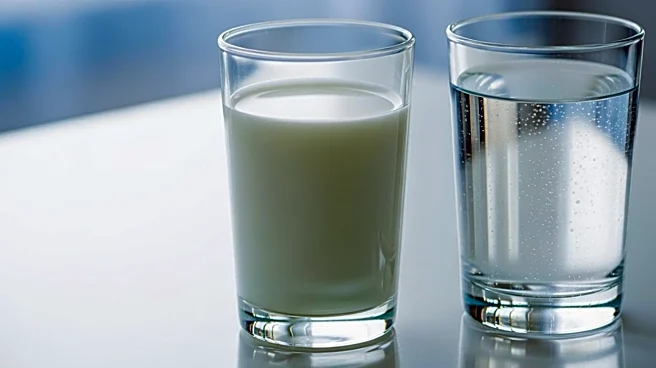
Recent studies have demonstrated that milk can maintain a positive fluid balance in the human body longer than plain water. This finding is based on research that established a Beverage Hydration Index, comparing various drinks over a four-hour period.
Milk, due to its unique composition of electrolytes and macronutrients, slows gastric emptying, allowing for prolonged fluid retention. Sodium and potassium in milk act as sponges, reducing urine output and enhancing hydration. While milk's hydration benefits are clear, experts caution against using it as a primary hydration source due to its high caloric content.
Why It's Important?
The discovery that milk can hydrate more effectively than water has implications for athletes and individuals engaged in intense physical activities. Milk's ability to restore fluid balance could make it a valuable recovery drink, providing both hydration and essential nutrients. However, for the general population, water remains the preferred choice due to its calorie-free nature. This research highlights the need to consider nutritional content when choosing beverages for hydration, especially in contexts where calorie intake is a concern.
What's Next?
Further studies are needed to explore the long-term hydration benefits of milk and its practical applications for everyday use. Researchers may investigate the potential of milk permeate solutions, which offer hydration benefits without the caloric load. The beverage industry might explore new formulations that combine milk's hydration properties with lower calorie content, potentially leading to innovative products for athletes and health-conscious consumers.
Beyond the Headlines
The findings challenge traditional views on hydration and could influence dietary guidelines and consumer choices. As the understanding of hydration evolves, there may be increased interest in developing beverages that optimize fluid retention while minimizing calorie intake. This could lead to a shift in how hydration is approached in both sports nutrition and general health contexts.