
What's Happening?
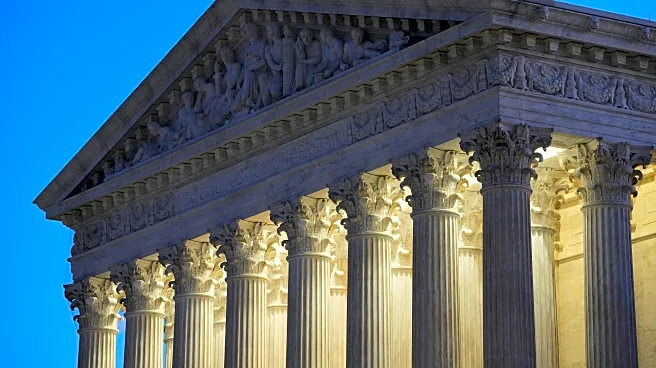
The U.S. Supreme Court recently heard oral arguments in a case challenging the Trump administration's executive order aimed at ending birthright citizenship. This policy, issued on President Trump's first day in office in 2025, seeks to reinterpret the 14th
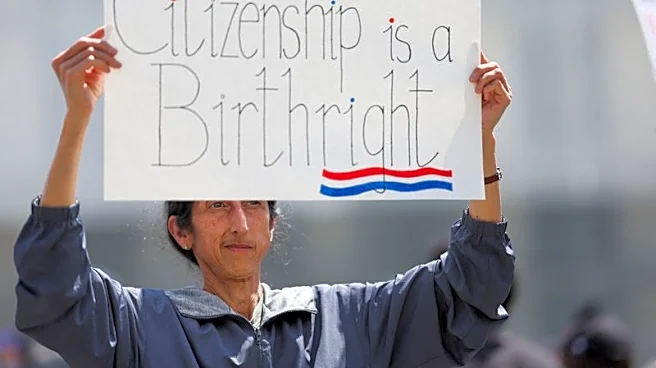
Amendment, which has historically guaranteed citizenship to all individuals born on U.S. soil. The case has sparked significant public interest, with around 250 demonstrators gathering outside the Supreme Court to protest the potential changes. Among the protesters were notable figures such as celebrity chef José Andrés and social activist Bishop William Barber, who criticized the executive order as an 'unholy attack on babies and children.' The demonstrators emphasized the importance of defending the constitutional right to birthright citizenship, which they argue is a fundamental aspect of the nation's identity as an immigrant nation.
Why It's Important?
The outcome of this case could have profound implications for immigration policy and the lives of millions of individuals in the United States. If the Supreme Court upholds the executive order, it could prevent hundreds of thousands of children born in the U.S. each year from automatically receiving citizenship. This would mark a significant shift in U.S. immigration policy and could lead to increased legal and social challenges for affected families. The case also highlights broader concerns about the influence of wealth and politics on the judiciary, as some protesters argue that the Supreme Court's composition has been influenced by external financial interests. The decision could set a precedent for future interpretations of the 14th Amendment and impact the rights of immigrants and their children across the country.
What's Next?
A final decision from the Supreme Court is expected this summer. The ruling will be closely watched by legal experts, policymakers, and immigrant communities, as it could redefine the scope of birthright citizenship in the United States. Depending on the outcome, there may be further legal challenges or legislative efforts to address the issue. Advocacy groups and civil rights organizations are likely to continue their efforts to protect birthright citizenship and support affected families. The case also has the potential to influence public opinion and political discourse on immigration policy in the lead-up to future elections.