







What's Happening?
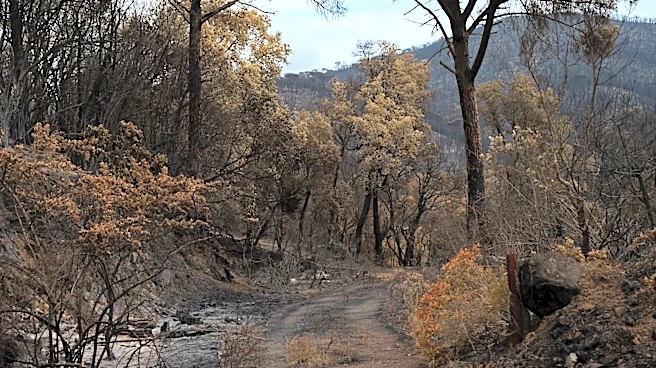
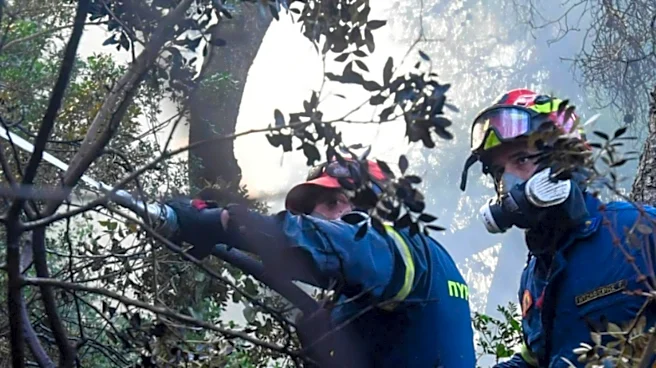
During the Ferris fire in the San Juan National Forest, Colorado firefighters prioritized saving stacks of logs intended for the Wood for Life program. This initiative, a collaboration between the Forest Service, National Forest Foundation, and tribal
organizations, aims to provide firewood to Native American communities lacking electricity. The program emerged after the closure of the Kayenta Coal Mine, which previously supplied coal to these communities. Despite some losses due to active fire behavior, many logs were preserved. The Wood for Life partnership has delivered over 32,620 cords of wood to tribal lands, supporting thousands of homes.
Why It's Important?
The Wood for Life program addresses critical energy needs for Native American communities, particularly after the loss of coal resources. By repurposing forest thinning byproducts, the initiative not only aids in wildfire management but also supports tribal communities' energy independence. This collaboration highlights the importance of sustainable resource management and the role of federal and tribal partnerships in addressing environmental and social challenges. The program's success could serve as a model for similar initiatives, promoting resilience and self-sufficiency in underserved areas.
What's Next?
The continuation and expansion of the Wood for Life program depend on ongoing collaboration between federal agencies and tribal organizations. Future efforts may focus on enhancing the program's reach and efficiency, potentially involving more national forests and increasing the volume of wood delivered. Stakeholders may also explore additional funding and support mechanisms to ensure the program's sustainability. As climate change exacerbates wildfire risks, such initiatives will be crucial in mitigating impacts and supporting vulnerable communities.