





What's Happening?
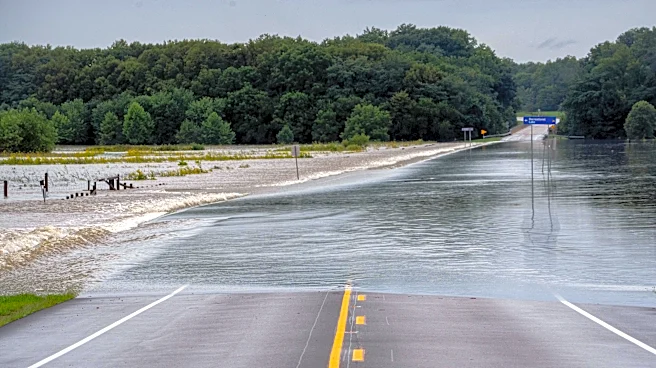
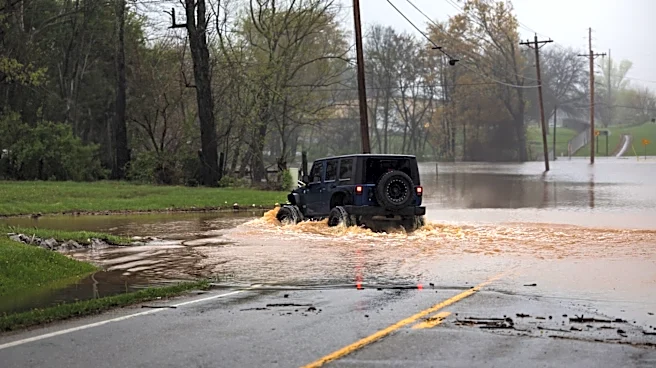
A 2-year-old girl in Rush County, Indiana, is in critical condition after being found drowning in her home's basement during severe flooding. The incident occurred last Tuesday following heavy storms that caused historic flooding in parts of the state.
Emergency crews faced impassable roads, requiring assistance from a local farmer with a tractor to reach the family's home, which was surrounded by deep water. The girl, identified as Alayna, was airlifted to an Indianapolis hospital and placed on a ventilator in a pediatric ICU. Her 13-year-old brother called 911, and her mother performed CPR. The Rush County Sheriff's Department has investigated the incident and determined it to be an accidental drowning. An update on a GoFundMe page, organized by Alayna's aunt, Poshia Slusher, and co-organizer Kaetlin Bowling, indicated that Alayna has begun breathing without ventilator assistance, though she faces a long recovery.
Why It's Important?
This tragic event highlights the severe and immediate dangers posed by extreme weather and flooding, particularly to vulnerable populations like young children. The need for community resilience and rapid emergency response is underscored by the challenges faced by first responders in reaching the affected home. The reliance on a local farmer's tractor to navigate flooded roads demonstrates how community members often become critical assets in disaster situations when conventional infrastructure is compromised. The incident also brings attention to the broader issue of home safety during natural disasters, as basements can quickly become death traps when water levels rise unexpectedly. The ongoing medical care and recovery process for Alayna will place a significant emotional and financial burden on her family, illustrating the long-term human cost of such environmental events.
What's Next?
Alayna faces a prolonged recovery period, with medical professionals continuing to monitor her condition in the pediatric ICU. Her family will likely continue to rely on community support, as evidenced by the GoFundMe campaign, to cover medical expenses and other needs arising from the incident. Local authorities and emergency services in Rush County may review their flood response protocols and infrastructure in light of the challenges encountered during this rescue, potentially leading to discussions about improving accessibility during severe weather events. Furthermore, public awareness campaigns regarding flood safety, especially for homes with basements, might be initiated or reinforced to prevent similar tragedies in the future. The community will likely rally around the family, offering continued assistance as Alayna progresses through her recovery.
Beyond the Headlines
The incident in Rush County transcends a singular tragic event, pointing to broader societal and environmental concerns. The 'historic flooding' mentioned suggests a potential link to changing climate patterns, which are increasingly leading to more frequent and intense weather events across the U.S. This raises questions about urban planning, infrastructure resilience, and the preparedness of communities, particularly in rural areas, to cope with such disasters. The reliance on a farmer's tractor for rescue highlights the informal networks and community spirit that often emerge in crises, but also exposes potential gaps in formal emergency response capabilities. Ethically, the event prompts reflection on the responsibilities of homeowners in flood-prone areas and the adequacy of public information regarding flood risks and safety measures. The long-term psychological impact on the family and the community, particularly the 13-year-old brother who called 911, will also be a significant, though often overlooked, consequence.