







What's Happening?
Scientists have discovered a remarkable fossil site beneath farmland in New South Wales, Australia, where fossils are preserved in iron-rich rock, offering microscopic details of ancient life. This site, known as McGraths Flat, contains fossils from a Miocene
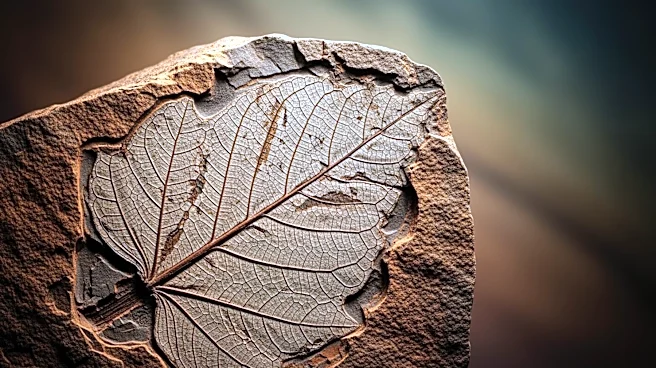
rainforest that thrived between 11 and 16 million years ago. The fossils are embedded in goethite, an iron-rich mineral, rather than traditional sedimentary rock, allowing for exceptional preservation of biological structures. Researchers have found feathers, insect organs, and cellular features, providing a detailed snapshot of an ancient ecosystem.
Why It's Important?
This discovery challenges long-standing assumptions about fossil preservation, which traditionally occurs in fine-grained sedimentary environments. The ability of iron-rich minerals to preserve delicate biological structures opens new possibilities for understanding Earth's past. It suggests that iron minerals can play a more active role in fossilization, particularly in terrestrial environments. This finding could lead to new methods for locating fossil sites and enhance the study of terrestrial life, which is often underrepresented in the fossil record.
What's Next?
Scientists will likely explore other iron-rich environments for similar fossil deposits, using the geological and environmental conditions of McGraths Flat as a blueprint. This could lead to significant breakthroughs in paleontology and expand the understanding of ancient ecosystems. The discovery may prompt a reevaluation of fossilization processes and encourage further research into the role of iron minerals in preserving biological detail.