






What's Happening?
Archibald Henderson, known as 'The Grand Old Man of the Marine Corps,' served as the Commandant of the Marine Corps for over 38 years, a record tenure that remains unmatched. Henderson's leadership began in 1820, during a period of low morale among Marines.
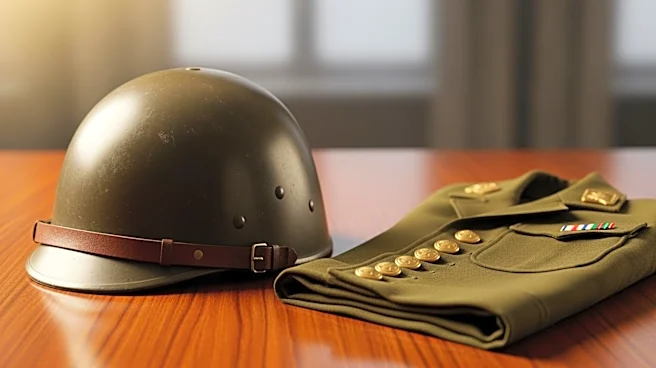
He worked tirelessly to improve conditions, traveling to various stations and engaging directly with Marines to boost their morale and public awareness of their mission. Henderson was instrumental in maintaining the Marine Corps as a separate military branch, successfully opposing President Andrew Jackson's proposal to merge it with the Army. His leadership extended to active participation in conflicts, such as the Second Seminole War, where he personally led Marines in combat. Henderson's tenure saw the Marines deployed globally, including in China, Central Florida, and during the Mexican-American War. He also introduced significant changes, such as altering the Corps' uniform colors. Henderson's dedication to the Marine Corps continued until his death in 1859, leaving a lasting legacy.
Why It's Important?
Henderson's leadership had a profound impact on the Marine Corps, shaping it into a distinct and respected military branch. His efforts to maintain the Corps' independence ensured its unique role within the U.S. military structure, allowing it to develop its own traditions and operational capabilities. By improving morale and public perception, Henderson strengthened the Corps' internal cohesion and external reputation. His actions during the Second Seminole War and other conflicts demonstrated the strategic importance of the Marines in U.S. military operations. Henderson's reforms, including uniform changes, contributed to the Corps' identity and esprit de corps. His legacy is a testament to the importance of strong, visionary leadership in military institutions, influencing the Corps' development and its role in national defense.
What's Next?
While Henderson's tenure ended over a century ago, his influence continues to be felt in the Marine Corps' traditions and operational philosophy. The Corps remains a separate branch under the Department of the Navy, as Henderson advocated. Future leaders of the Marine Corps may draw inspiration from Henderson's example of direct engagement with personnel and his commitment to maintaining the Corps' distinct identity. The ongoing evolution of military strategy and technology will require the Corps to adapt while preserving the core values and traditions established during Henderson's leadership.
Beyond the Headlines
Henderson's story highlights the broader themes of leadership, reform, and institutional identity within the military. His ability to navigate political challenges and advocate for the Corps' independence underscores the importance of strategic vision and advocacy in military leadership. Henderson's legacy also raises questions about the balance between tradition and innovation in military institutions, as leaders must adapt to changing circumstances while preserving core values. His tenure serves as a case study in the impact of individual leadership on the long-term development of military organizations.