







What's Happening?
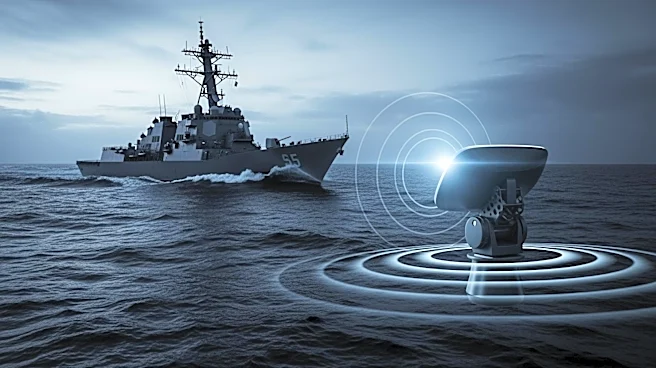
The USS Spruance, an Arleigh Burke-class guided-missile destroyer, intercepted an Iranian-flagged cargo vessel attempting to evade a U.S. maritime blockade. The vessel was redirected back to Iran after it exited the Strait of Hormuz. This action is part
of a larger blockade involving 10,000 troops, over a dozen warships, and more than 100 fighter and surveillance aircraft, initiated after failed peace talks between the U.S. and Iran. The blockade aims to prevent vessels from transiting to and from Iranian ports, although ships not visiting Iranian ports can still navigate the Strait of Hormuz.
Why It's Important?
The blockade represents a significant escalation in U.S.-Iran tensions, following unsuccessful negotiations aimed at curbing Iran's nuclear program. The U.S. aims to exert pressure on Iran by restricting its maritime trade, which could have substantial economic implications for the region. The blockade also underscores the strategic importance of the Strait of Hormuz, a critical chokepoint for global oil shipments. The U.S. military's involvement highlights the potential for increased military engagement in the region, affecting global oil markets and international relations.
What's Next?
The blockade is likely to continue as the U.S. seeks to enforce its maritime restrictions. Iran may respond with diplomatic or military measures, potentially escalating tensions further. The international community, including allies and adversaries, will closely monitor the situation, which could influence global diplomatic and economic strategies. The U.S. may also face pressure to justify its actions under international law, particularly if the blockade leads to humanitarian or economic crises.