
What's Happening?
An Ohio bill introduced in the state Senate aims to impose new requirements on retail food establishments and pharmacies that operate self-service checkout lanes. Senate Bill 415, introduced by State Senator
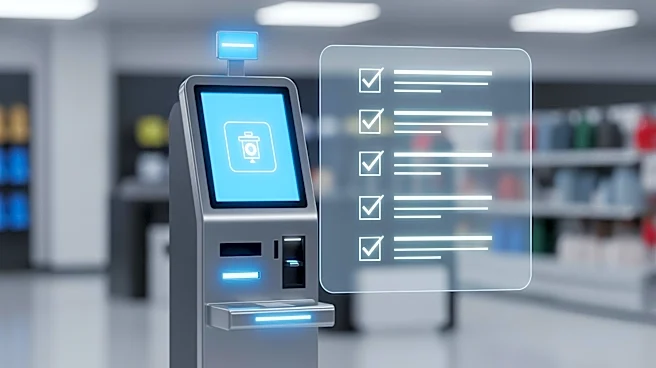
Thomas Patton, seeks to ensure that these establishments maintain at least one staffed checkout lane and limit self-service checkouts to a maximum of 15 items per transaction. Additionally, the bill mandates that at least one employee must monitor the self-service checkout area without other responsibilities, and that the area should be observable by law enforcement and employees. The bill also prohibits the sale of certain goods, such as age-restricted items like alcohol and tobacco, at self-service checkouts. Establishments would be required to display clear signage informing the public of these requirements and enforcement options, including a link or QR code to the relevant section of the revised code. The legislation allows customers or employees to take civil action if these regulations are violated.
Why It's Important?
The proposed legislation reflects growing concerns about the impact of self-service checkouts on employment and consumer protection. By requiring staffed checkout lanes and limiting the use of self-service options, the bill aims to preserve jobs that might otherwise be lost to automation. It also addresses security concerns by ensuring that self-service areas are monitored, potentially reducing theft and ensuring compliance with age-restricted sales laws. For consumers, the bill could enhance the shopping experience by reducing wait times at staffed lanes and ensuring assistance is available when needed. Retailers, however, may face increased operational costs due to the need for additional staffing and compliance with the new regulations. The bill highlights the ongoing debate over the balance between technological convenience and the preservation of traditional retail jobs.
What's Next?
If passed, the bill would require retail establishments to adjust their operations to comply with the new regulations. This could involve hiring additional staff and implementing new monitoring systems for self-service areas. Retailers may also need to update their checkout systems to enforce the item limit and restrict certain sales. The bill's progress through the legislative process will be closely watched by both industry stakeholders and consumer advocacy groups. Retailers may lobby for amendments to the bill to reduce its impact on their operations, while labor groups and consumer advocates may push for its swift passage to protect jobs and consumer rights.