
What's Happening?
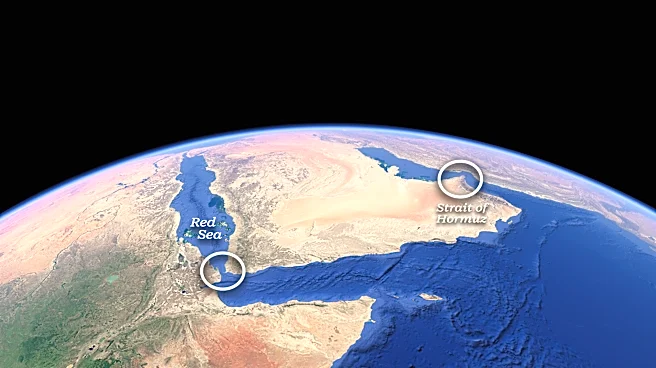
Saudi Arabia has experienced a significant decline in crude exports from the Red Sea, with volumes dropping by 41% since March, according to Wood Mackenzie data. The decline follows the redirection of
exports through the East-West pipeline to Yanbu on the Red Sea, a strategy implemented at the start of the Iran conflict. However, recent attacks by Yemen's Houthi rebels on Saudi tankers in the Bab el-Mandeb Strait have further complicated the situation. The Houthis, aligned with Iran, have declared a naval blockade, targeting Saudi oil exports and creating a new chokepoint in the region. This development poses a threat to Saudi Arabia's oil export strategy, which aimed to reduce reliance on the Strait of Hormuz.
Why It's Important?
The reduction in Saudi crude exports through the Red Sea highlights the vulnerabilities in global oil supply chains, particularly in conflict-prone regions. The reliance on the Red Sea as an alternative route underscores the strategic importance of diversifying export pathways. The Houthi attacks and the resulting blockade could lead to increased oil prices and supply disruptions, affecting global markets. The situation also emphasizes the geopolitical complexities in the Middle East, where regional conflicts can have significant economic repercussions. Stakeholders, including oil-importing countries and energy companies, must consider these risks in their strategic planning.