




What's Happening?
Dr. Kevin Winthrop, Professor of Infectious Diseases, Ophthalmology, and Public Health at Oregon Health & Science University, delivered a keynote address at the Global Rheumatology Summit, part of ACR Convergence 2026. He discussed the evolving landscape
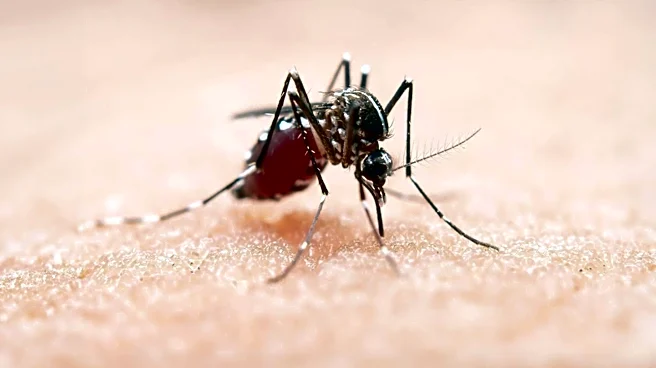
of rheumatology in the context of environmental change, specifically focusing on how a warming climate influences infectious disease exposure. Dr. Winthrop highlighted mosquito-borne infections like chikungunya, Zika, and dengue, noting that changing mosquito habitats could lead to increased exposure in previously unaffected regions. He emphasized that chikungunya is particularly concerning for rheumatologists due to its potential to cause persistent inflammatory arthritis, with up to 48% of acute cases leading to arthritis up to six months post-infection, and 5% to 10% developing chronic arthritis, some evolving into rheumatoid arthritis (RA). The discussion also covered the expanding geographic distribution of disease-carrying ticks, contributing to the rising prevalence of Lyme disease in parts of New England and the upper Midwest.
Why It's Important?
The insights shared by Dr. Winthrop are crucial for understanding the interconnectedness of environmental changes, infectious diseases, and autoimmune conditions in the U.S. The increasing prevalence of vector-borne diseases like chikungunya and Lyme disease directly impacts public health and the healthcare system. The potential for these infections to trigger chronic inflammatory arthritis and even rheumatoid arthritis means a growing burden on rheumatology practices and an increased need for long-term patient care. This trend could lead to higher healthcare costs, a greater demand for specialized medical professionals, and a need for enhanced public health infrastructure to monitor and respond to these emerging threats. The challenges in vaccine development and evaluation for unpredictable outbreaks also underscore the need for innovative research and funding to protect vulnerable populations.
What's Next?
Dr. Winthrop underscored the critical need for robust disease surveillance, environmental monitoring, and international collaboration to effectively respond to emerging infectious threats. This calls for a stronger public health infrastructure, adequately funded and staffed, with a priority on environmental surveillance. Future efforts will likely focus on developing more effective vaccines for diseases like chikungunya, dengue, and Lyme disease, while also addressing the complexities of evaluating vaccine efficacy in unpredictable outbreak scenarios. Additionally, research will continue to explore the intricate relationship between various infections and the initiation of immune responses that contribute to autoimmune diseases in susceptible individuals. The medical community will need to adapt to these changing disease patterns, potentially leading to new diagnostic and treatment protocols for post-infectious rheumatologic conditions.
Beyond the Headlines
The discussion extends beyond immediate health concerns to highlight the broader implications of climate change on human health. The expansion of mosquito and tick habitats into new regions due to warming temperatures represents a significant ecological shift with profound public health consequences. This situation raises ethical questions about global environmental responsibility and the equitable distribution of resources for disease prevention and treatment. The complex interplay between infections and autoimmune diseases also points to a deeper understanding of human immunology and the factors that trigger chronic conditions. This development could spur advancements in personalized medicine, focusing on individual susceptibility and immune responses. Ultimately, the insights emphasize the urgent need for a holistic approach that integrates environmental science, public health, and medical research to address the multifaceted challenges posed by a changing climate.